CITB says rise in number of workers reflects housing boom.
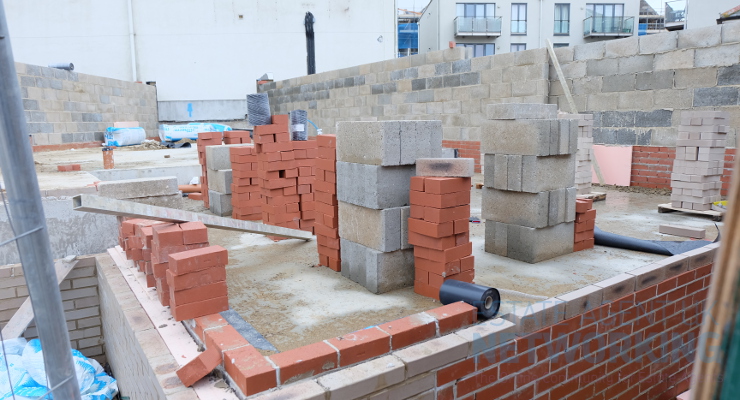
The Construction Industry Training Board says the industry must recruit more than 200,000 extra workers in the next 5 years to keep on top of rising demand. For the first time since the downturn, rising spending on housing, leisure and infrastructure will deliver growth in every region of the UK. To deal with the upswing in workloads, the industry needs to recruit almost 45,000 workers annually, 8,000 more than predicted at the start of the recovery. The annual forecast predicts that commercial work will expand at the same pace as housing estimated at 4.6% annually over the forecast period to 2019. Total construction employment is projected to reach 2.74m in 2019, still a little below its peak level in 2008 of 2.86m.

With 200,000 homes a year needed to house Britain’s population boom and many people priced out of the Cities, there is growing pressure to create more garden cities, a movement that culminated in the creation of Letchworth Garden City, 37 miles north of London and a second garden city, Welwyn Garden City, which was started after WWI. These two cities were influential in the development of New Towns after WWII, producing more than 30 communities including Stevenage and the last, Milton Keynes.

Garden Cities were designed to avoid the downfalls of industrial cities of the time such as urban poverty, overcrowding, low wages, and dirty alleys with no drainage, poorly ventilated houses, toxic substances, dust, carbon gases, infectious disease and lack of interaction with nature.

Garden cities were used as the model for many suburbs we see across the UK today. Now, the Government plans to open up brownfield sites to build affordable housing for first time buyers under the age of 40.

All the indicators are that it is an exceptionally good time to invest in land ear-marked for housing development, particularly land that provides easy access for commuters to London and other big conurbations such as Manchester and other cities in the “Northern PowerHouse”.

Alex Evans

You May Also Enjoy

Estate Agent Talk

Is it worth buying a fixer-upper property?

The latest research from eXp UK reveals that fixer-upper homes can be picked up for an average saving of more than £44,000, but when the cost of renovating the property is accounted for do homebuyers actually stand to make a saving? And what chance do buyers have of finding one on today’s market? Fixer-uppers are…
Read More
Breaking News

Nottingham letting agents are the busiest in Britain

The latest research from Propoly reveals that across Britain’s major cities, there are an average of 13.5 rental listings for each single letting agency branch, with the nation’s busiest agents found in Nottingham where this figure climbs to 35 properties per professional. Propoly has analysed the estimated number of current rental listings in 21 of…
Read More
Breaking News

The six protections every new-build buyer must check before signing

With 53% of homebuyers saying they would prefer a new build, demand remains high, but so do the risks if buyers fail to ask the right questions. Buying a new build often means committing to a property that is not yet finished, which makes the small print just as important. Without these protections, buyers risk…
Read More
Breaking News

Rental price and average salary tracker – February 2026

Regional divergence replaces winter slowdown as rental market shows mixed February movement Month-on-month rental prices showed a mixed picture in February. Notable increases were recorded in the East Midlands (+3.4%), North West (+2.8%), Scotland (+2.7%) and South East (+2.0%), suggesting demand has firmed in several areas. However, Northern Ireland (−6.6%), West Midlands (−1.3%), East of…
Read More
Breaking News

UK property sector gender pay gap keeps getting wider

UK property sector gender pay gap keeps getting wider and It now has the fourth largest gap across all UK industries The latest research from Yopa reveals that real estate remains one of the UK’s worst-performing industries when it comes to the gender pay gap, ranking as the fourth largest across all sectors after widening…
Read More
Rightmove logo
Breaking News

Britain’s most expensive streets revealed

The latest edition of Rightmove’s Most Expensive Streets report reveals that Winnington Road in Barnet, London, retains its position as Great Britain’s most expensive street, with an average asking price of £12,538,095 Chester Square in Westminster is second, with an average asking price of £11,546,428 and The Bishops Avenue in Barnet is third, with a price tag of £8,930,650 East Road…
Read More