


Renters see bigger increase in monthly payments than mortgaged homeowners over last three years – up £221 pcm
New analysis1 from Zoopla, one of the UK’s leading property websites, reveals that private renters have seen a greater increase in their monthly housing costs since 2022 than mortgaged homeowners.
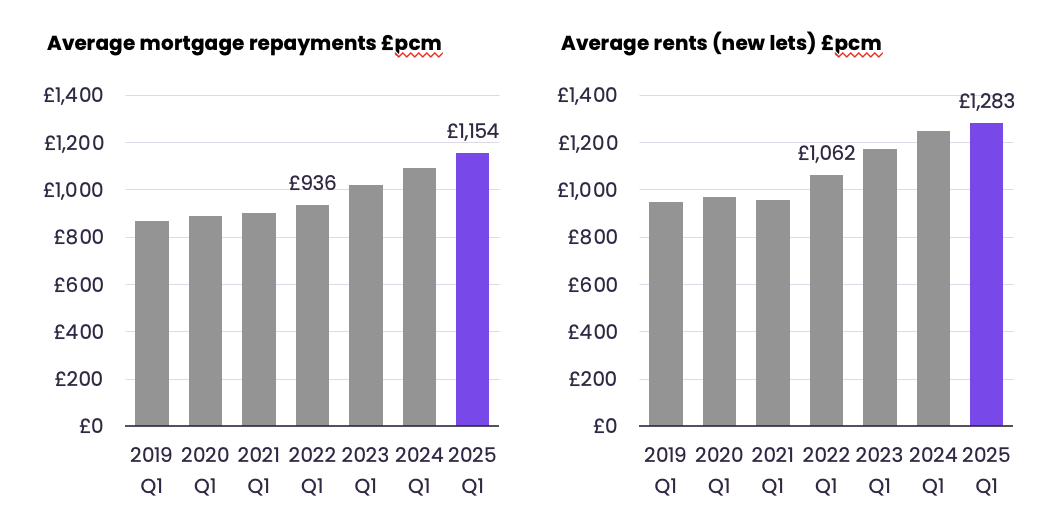
Average rents in the UK currently sit at £1,283 per month, with mortgage repayments for an average outstanding loan at £1,154 per month. Over the last three years, higher mortgage rates have increased the average mortgage repayment on outstanding mortgages by £218 per month. Rents for new lets have risen by £221pcm over the same period as demand for rented homes grew rapidly over 2022 and 2023, while the stock of private rented homes has remained broadly static due to low levels of new investment by landlords.
Table 1: Average UK mortgage repayments and UK rents for new lets £pcm
Source: Zoopla Research 2025 – see notes to editors for methodology and detailed sources
Some local areas have registered particularly rapid increases in rents over the last three years as rental demand has run well ahead of the growth in rental supply. In places like Oldham, Wigan, and Bolton, rents have surged by over 31 per cent in three years as rents increased off a relatively low base. Rents are highest in London with these areas registering the largest monetary increases, up by up to £400pcm over the last three years with the greatest increases in more affordable areas in outer London such as Ilford in East London.
Table 2: Postal areas where rents have grown most in % terms over last three years
|
Postal area |
Rent £pcm Mar-25 |
% change 2022-2025 |
£pcm change 2022-25 |
£pa change 2022-25 |
|
Oldham – OL |
£876 |
35% |
£227 |
£2,724 |
|
Wigan – WN |
£800 |
32% |
£194 |
£2,328 |
|
Bolton – BL |
£884 |
31% |
£211 |
£2,532 |
|
Falkirk – FK |
£881 |
31% |
£207 |
£2,484 |
|
Walsall -WS |
£893 |
30% |
£206 |
£2,472 |
|
Wolverhampton -WV |
£911 |
30% |
£209 |
£2,508 |
|
Paisley – PA |
£763 |
29% |
£170 |
£2,040 |
|
Tweeddale – TD |
£635 |
29% |
£143 |
£1,716 |
|
Dudley – DY |
£878 |
28% |
£190 |
£2,280 |
|
Ilford – IG |
£1,794 |
28% |
£395 |
£4,740 |
|
Kirkcaldy – KY |
£717 |
28% |
£156 |
£1,872 |
|
Romford – RM |
£1,611 |
28% |
£356 |
£4,272 |
|
Carlisle – CA |
£664 |
27% |
£140 |
£1,680 |
|
Edinburgh – EH |
£1,166 |
27% |
£248 |
£2,976 |
|
Luton – LU |
£1,208 |
27% |
£258 |
£3,096 |
|
Blackburn – BB |
£688 |
26% |
£141 |
£1,692 |
|
Manchester – M |
£1,176 |
26% |
£239 |
£2,868 |
|
Medway – ME |
£1,239 |
26% |
£254 |
£3,048 |
|
Motherwell – ML |
£721 |
26% |
£148 |
£1,776 |
|
Newcastle – NE |
£853 |
26% |
£177 |
£2,124 |
|
Slough – SL |
£1,599 |
26% |
£326 |
£3,912 |
Source: Zoopla Rental Index 2025
The rise in the costs of renting since 2022 is down to a surge in rental demand in the wake of the pandemic. A strong labour market and higher levels of migration for work and study have boosted rental demand. Mortgage rates spiked higher over 2022 and 2023 making it harder to buy homes, with many first-time buyers remaining in the rental market for longer, further boosting demand while also suppressing supply, pushing rents higher.
Robust growth in average earnings over the last three years has supported the faster growth in average rents however private renters on lower incomes and those relying on state support have faced a greater squeeze on living costs from higher housing costs.
However, rental inflation for new lets is now running at its lowest rate for four years as rental demand has weakened off a high base due to lower levels of migration for work and study and improvements in mortgage market conditions for first time buyers. Rental affordability is also limiting the pace at which rents can increase.
The mortgage market has been resilient to higher mortgage costs, largely down to tougher mortgage regulations introduced from 2015 which ensured borrowers could afford higher rates in future. One advantage for mortgagees over renters is that their monthly repayments go towards covering both interest costs and the repayment of the loan which reduces slowly over time.
A tougher path to home ownership for renters looking to buy ensures continued strong demand for rented homes in a market, where the stock of homes has remained static for almost a decade due to low investment by landlords. A continued supply/demand imbalance is keeping a steady upward pressure on rents.
Richard Donnell, Executive Director at Zoopla comments:
“A shift to higher mortgage rates raised alarm over how mortgagees would be able to afford higher repayments over the last three years. The sales market has been resilient thanks to mortgage regulations that ensured borrowers could afford higher mortgage rates. Renters have faced similarly steep increases in the cost of renting in recent years with rents pushed higher on string demand and limited supply of homes for rent which has hit lower income renters hardest.
“Rental inflation for new lets has slowed to its lowest rate for four years which will be welcome news for Britain’s private renters. The quickest way to alleviate high rents is to grow the stock of homes for rent in both the social and private rented sectors. Growing housing supply is a key Government target and its vital that the stock of rented homes is expanded across all tenures.”

You May Also Enjoy

Gap between house prices and earnings narrows
New Scheme Could Double Solo Buyer New-Build Options

Annual house price growth halves in September

Homesellers say valuation appointment is key
London’s rental market bucks the national trend