Thousands of HMOs still contain life-threatening hazards
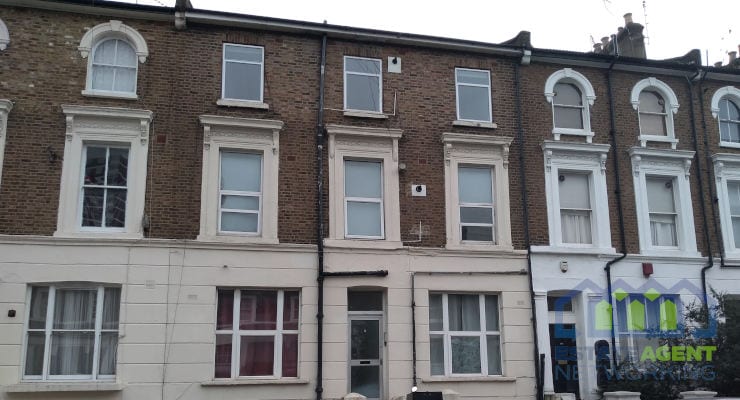
The Renters’ Rights Act has finally become law. Among its many provisions, it gives local authorities greater power to crack down on Category 1 hazards in rented homes, including within the HMO sector. HMO landlords are now being urged to act swiftly after new research by Inventory Base revealed that more than 2,300 HMOs in England contain a Category 1 hazard.
According to the Housing Health and Safety Rating System (HHSRS), a Category 1 hazard represents the most serious and immediate risk to a person’s health and safety that can be found in the home. Such hazards include fire risks, severe structural damage, excess cold, and electrical faults, all of which have the potential to cause death, permanent paralysis, or serious injury.
Inventory Base’s analysis of the latest government data* shows that there are currently 2,334 HMOs in England with a Category 1 hazard. This equates to 1.8% of England’s total HMO stock, which stands at 131,061 properties.
On a regional level, Yorkshire & Humber has the highest proportion of affected properties, with 3.2% of the region’s HMOs containing a Category 1 hazard. This is followed by London at 2.7% and the South East at 2.1%, both above the national average.
There is some encouraging news, however. The overall number of HMOs with Category 1 hazards has fallen by -18.8% across England between 2022/23 and 2023/24, according to the most recent figures. The South West has seen the sharpest decline, with a reduction of -64.4%, followed by the East of England (-54.8%), the North West (-49.5%), Yorkshire and the Humber (-29.6%), and London (-11.5%).
Despite these improvements, several regions have seen a significant rise in hazardous properties. In the North East, the number of HMOs with Category 1 hazards has increased by 130%, while the West Midlands is up 70.7%, the South East 35.1%, and the East Midlands 33.3%.
With enforcement powers now strengthened under the Renters’ Rights Act, local authorities are expected to intensify their focus on unsafe properties, though any outcome is likely to depend heavily on local funding and capacity. Inventory Base is urging HMO landlords to take proactive steps to inspect, document, and address any potential risks before enforcement action escalates.
Sián Hemming-Metcalfe, Operations Director at Inventory Base says:
“Category 1 hazards aren’t technicalities – they’re life-threatening. Every faulty wire, every structural weakness, every unchecked fire risk represents a potential tragedy. The fact that thousands of HMOs are still unsafe shows how far we are from making rented housing genuinely fit for purpose. For too long, weak enforcement has let hazards fester. Responsible landlords are held back by those who don’t play by the rules – and tenants are the ones who suffer.
The Renters’ Rights Act draws a line. It finally gives councils the power to act – and landlords the push to fix what’s broken. At Inventory Base, we’ve always believed prevention beats enforcement. Our platform helps landlords, agents, and local authorities identify, document, and fix hazards quickly and transparently. Technology has taken the excuses away, now it’s about who’s ready to use it.”

You May Also Enjoy

Gap between house prices and earnings narrows

New Scheme Could Double Solo Buyer New-Build Options
Annual house price growth halves in September

Homesellers say valuation appointment is key
London’s rental market bucks the national trend