


The Plumbing and Electrical Problems That Quietly Kill Sales and Lettings

We’ve all had one of these.
The offer’s agreed. Everyone’s happy. The memorandum of sale has gone out, and you’re already mentally banking the fee. Then the buyer’s survey comes back.
“Electrics appear dated. Recommend inspection by a qualified electrician.”
And just like that, the mood changes. The buyer starts asking about a reduction. The vendor digs their heels in. Two weeks later you’re on the phone trying to hold a chain together with sticky tape.
The frustrating part? Most of the time, the warning signs were there on the first visit. A tired fuse box. A brown stain on the kitchen ceiling. A boiler older than the vendor’s teenage kids. Nobody mentioned it because nobody was looking.
So let’s talk about what to look for.
Buyers Are Twitchier Than They Were
With rates heading back up, buyers are watching every pound. A £6,000 rewire or a £3,500 new boiler isn’t a minor detail to someone who’s already stretched. It’s a reason to renegotiate, or a reason to walk.
Landlords have even less wiggle room. Electrical safety in rented homes has been a legal requirement in England since 2020. Under those rules, landlords have to:
- Get the electrics inspected and tested at least every five years
- Hand tenants a copy of the EICR within 28 days of the inspection
- Send it to the council within seven days if they ask for it
- Get any remedial work done within 28 days, or sooner if the report says so
Councils can fine up to £30,000 for breaches. That’s not small change for a landlord with one or two properties. And if you’re managing the property, it’s your reputation on the line too.
Quick question. How many EICRs across your managed portfolio expire in the next six months? If you had to think about it, you’re not alone. But it’s worth finding out.

The Electrical Stuff You Can Spot in Two Minutes
You don’t need to be an electrician. You just need to open the cupboard under the stairs and have a look.
Here’s what tends to give an old installation away:
- Rewirable fuses. If you see ceramic fuse holders or a board that looks like it came out of a museum, the wiring behind it is probably just as old.
- No test button. Modern consumer units have RCDs with a little “T” or “Test” button. No button usually means no RCD protection.
- A plastic consumer unit. Since 2016, new domestic units have to be non-combustible, which in practice means metal. A plastic one isn’t necessarily dangerous, but it tells you the installation is older than current standards.
- Light switches on the skirting or round-pin sockets. Classic signs of 1960s wiring, or earlier.
- Black rubber cable. If you can see any, it’s old and it’s probably crumbling.
- Scorch marks or warm sockets. That’s not a “mention it later” job. That needs looking at.
- Extension leads in every room. Usually means there were never enough sockets in the first place.
None of this means you turn the instruction down. It just means you have an honest chat with the vendor before the photos go on Rightmove, not after the surveyor has had their say.
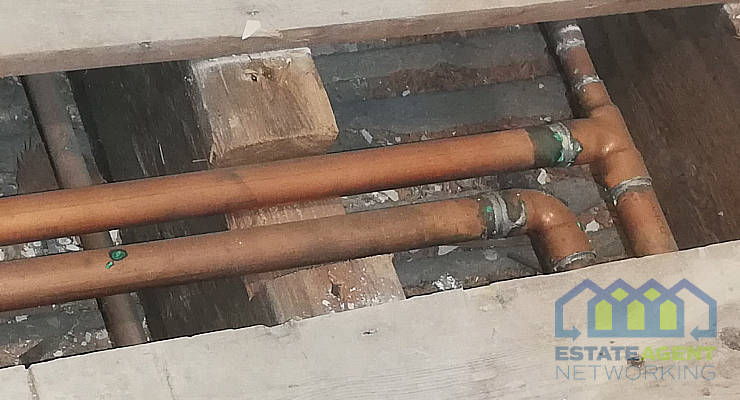
The Plumbing Clues Surveyors Always Find
Water is sneaky. It gets into places you can’t see and does damage slowly. Escape of water is one of the biggest causes of home insurance claims in the UK, and surveyors know exactly where to look for it.
So should you. Keep an eye out for:
- Stains on the ceiling under the bathroom. Even a fresh coat of paint doesn’t always hide them.
- A floor that gives a bit around the toilet or bath. That’s often water getting into the boards or joists.
- Weak pressure upstairs. Run a tap. If it dribbles, the pipework or the system might be struggling.
- An old boiler with no paperwork. Most boilers last somewhere around 10 to 15 years. No service history plus an old model equals awkward questions from the buyer.
- Lead pipes. They were banned for new water pipes in 1970, but plenty of older homes still have a run near the stopcock. Dull grey, soft, and a bit of a giveaway when you know what you’re looking at.
- Damp and mould. Sometimes it’s just poor ventilation. Sometimes it’s a slow leak nobody’s found yet.
Damp and mould deserve a special mention for anyone in lettings. Awaab’s Law already puts strict deadlines on social landlords to deal with these hazards, and the government has made it clear private renting is heading the same way. Getting ahead of it now is a lot easier than scrambling later.
How a Small Problem Becomes a Dead Sale
It’s never the problem itself that kills the deal. It’s the timing.
Spot a dodgy fuse box at valuation and it’s a five-minute conversation. Let a surveyor spot it eight weeks into the sale and it plays out something like this:
- The surveyor recommends a specialist inspection.
- The buyer hits pause while they get quotes.
- The quotes come back bigger than anyone hoped.
- The buyer asks for money off.
- The vendor says no, or the buyer just loses their nerve.
- The property goes back on the market with a story attached.
Every one of those steps costs time. Meanwhile the chain is getting restless, your vendor is getting stressed, and your fee is sitting in limbo.
Lettings has its own version. A failed EICR or an unresolved leak can push a move-in date back. The landlord loses rent. The tenant starts the tenancy annoyed. And who do they blame? Usually the agent.
Wouldn’t you rather know about all of it before the board goes up?
Making It Part of How You Work
This doesn’t need a whole new process. It just needs a few habits.
On the sales side
- Ask the awkward questions early. When was it last rewired? How old’s the boiler? Ever had a leak? Most vendors will tell you if you ask.
- Get the paperwork in the pack. Electrical certificates, boiler service records, receipts for any work done. Buyers love seeing it.
- Suggest a pre-sale EICR on older homes. A few hundred pounds now can save a sale later. That’s an easy sell when you put it like that.
- Price it honestly. If the house needs work, build it into the asking price. Hoping the surveyor won’t notice rarely works.
On the lettings side
- Keep EICR dates in one place. Your system, not the landlord’s memory.
- Bundle the checks. Lots of landlords like having the electrics looked at around the same time as the annual gas safety check and boiler service. One visit, less hassle.
- Don’t sit on small jobs. A dripping tap left for six months can turn into a rotten floor and a damp complaint.
- Have trades you trust on speed dial. When a tenant rings at 7pm with water coming through the ceiling, you don’t want to be Googling.
Your Contacts Book Matters
Every decent agent has a list of people they trust. Conveyancers, surveyors, brokers, removal firms. Good plumbers and electricians belong on that list too, and honestly, they’re often the ones you’ll need most urgently.
Having reliable trades means you can:
- Get EICRs and remedial work turned around quickly
- Give vendors and buyers proper written quotes to negotiate with, instead of guesswork
- Get someone out fast when a tenant has a problem
- Recommend people with confidence, which reflects well on you
If you’re working in Norfolk, Eastern Electrical handle EICRs, consumer unit upgrades and full rewires for landlords and homeowners. For leaks, boilers and tired old pipework, Royal Flush Plumbing can sort the repair and give you a written report to keep the sale or tenancy moving.
Wherever you’re based, the point is the same. Find your people before you need them.
Knowing This Stuff Makes You Look Good
Here’s the thing most agents miss. Vendors and landlords usually know very little about their own wiring or pipes. They’re relying on you.
So when you walk into a valuation and say, “Your consumer unit looks a bit dated, it might be worth getting an EICR before we go live,” you don’t come across as picky. You come across as someone who knows what they’re doing. Someone who’s going to protect their sale.
That builds trust. It cuts down on fall-throughs. It protects your fee. And for your landlords, it keeps them out of trouble with the council.
Next time you’re doing a valuation, try asking yourself one thing. If a surveyor walked round this house tomorrow, what would they pick up on?
Work that out on day one, and you’ll spend a lot less time rescuing deals that never needed rescuing.

You May Also Enjoy
The Plumbing and Electrical Problems That Quietly Kill Sales and Lettings

Rental price and average salary tracker – October 2026

Portfolio landlords have outgrown traditional property management

Real-life value of the most famous Christmas film homes

77% of buyers refuse to buy a flood risk property