


Building the Wrong Homes Won’t Fix Homeownership
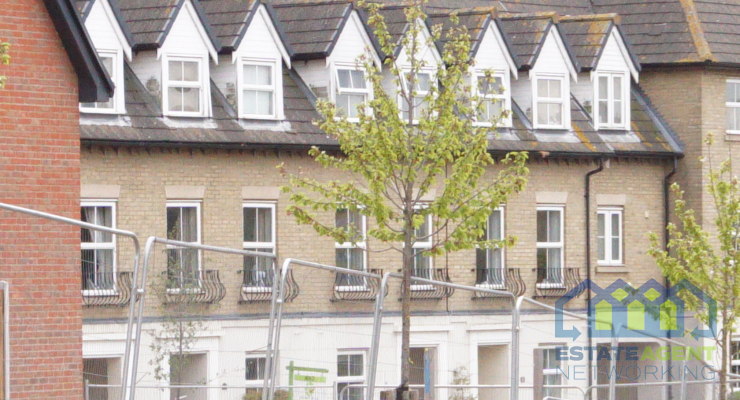
For many years, the national discussion about affordable housing has focused on one appealing idea that simply building more houses will make it easier for first-time buyers to own a home, and the issue will fix itself.
However, Propertymark’s member agents, working daily in local housing markets across the UK, see a far more complex reality. The challenge facing first-time buyers is not simply one of volume, but of suitability, affordability, and access. This is a point we made clear in January in our evidence to the House of Commons Housing, Communities and Local Government Committee inquiry into the affordability of homeownership.
Put plainly, we are not building the homes first-time buyers need, in the places they need them, at prices they can realistically afford, nor are we removing the structural barriers that prevent people from moving through the market.
Supply exists, but often not where it counts
In many parts of the country, housing stock levels have recovered from the extreme shortages seen during and immediately after the pandemic. Competition has cooled, viewing volumes have normalised, and buyers are no longer forced into snap decisions.
Yet many first-time buyers remain locked out.
Why? Because the properties coming onto the market too often fail the basic test of suitability. Smaller houses, entry-level flats, maisonettes, and well-located starter homes, close to transport links, employment centres, and essential services, are in persistently short supply. These are the homes first-time buyers consistently seek and consistently struggle to secure.
Instead, supply is skewed towards larger, higher-value homes or new-build properties priced at a premium that stretches affordability even before interest rates, service charges, and ongoing costs are factored in. Quantity without accessibility does little to improve outcomes for aspiring homeowners.
A housing ladder that no longer moves
Another structural issue highlighted in Propertymark’s parliamentary evidence is the growing rigidity of the housing chain. Downsizers, who would traditionally free up smaller, more affordable homes, are increasingly staying put.
Punitive property taxes costs play a significant role here. As an upfront tax on moving home, property tax be it Stamp Duty Land Tax in England and Northern Ireland, Land and Buildings Transaction Tax in Scotland and Land Transaction Tax in Wales discourages transactions at every stage of the market. For older homeowners, it acts as a deterrent to downsizing; for first-time buyers, it adds to an already formidable set of upfront costs. The result is reduced mobility, slower market churn, and fewer opportunities for those trying to take their first step onto the ladder.
This is not a demand problem. First-time buyers are motivated, mortgage-ready, and actively searching. It is a flow problem, and one that cannot be solved by headline housebuilding targets alone.
Affordability is about more than price
Affordability is often discussed as if it were a single number. In reality, it is shaped by multiple, compounding barriers. Deposit requirements have risen sharply as prices have increased, placing homeownership further out of reach even for those with stable incomes.
On top of this, upfront costs such as property taxes, legal fees, surveys, and moving expenses create a substantial financial hurdle. Property taxes in particular remain a clear barrier to homeownership and market participation. Propertymark believes the UK Government must review the effectiveness of property taxes, assess how it operates across different regions, and engage properly with the sector to understand its full impact, including how it can distort behaviour, reduce mobility, and encourage speculation rather than long-term, sustainable homeownership.
In our submission to the Housing Committee in Westminster, we were clear that when people cannot afford to move, effective supply contracts, even if homes technically exist.
New builds: part of the answer, but not the whole solution
New-build homes are frequently positioned as the default solution for first-time buyers, and they do have an important role to play. However, our member agents report a persistent mismatch between what is delivered and what buyers can realistically afford.
In many cases, prices assume dual incomes, long mortgage terms, and minimal financial resilience. Incentives may help at the margins, but they do not fundamentally alter affordability. Location is another recurring issue: developments are often driven by land availability rather than proximity to jobs, transport, or existing communities.
As a result, many first-time buyers explore new-build options, only to return to the second-hand market in search of better value, where supply is already constrained.
Why local insight must shape national policy
One of the strongest messages in Propertymark’s evidence to MPs in the House of Commons was that housing affordability is intensely local. National averages conceal stark regional disparities.
In commuter areas, demand for entry-level homes massively outstrips supply. In rural and coastal regions, lower prices are offset by limited employment opportunities. In city centres, leasehold complexity and building safety concerns have reduced the number of mortgageable flats available to first-time buyers.
A one-size-fits-all approach to housing delivery, taxation, and regulation does not reflect how people experience the market on the ground.
Empowering buyers through better information
Alongside supply-side reform, Propertymark has called for better consumer support, including the introduction of a First-Time Buyer Decision Tool. Proposed in our submission to the Housing Committee, this tool would help people understand the true, indicative cost of buying a home.
Crucially, it would bring together information on deposits, mortgage affordability, property taxes, the support available to first-time buyers, and what buyers can expect to pay for professional services such as estate agency, conveyancing, and surveys. By setting out these costs clearly and consistently, the tool would help buyers plan more effectively and avoid unexpected financial shocks.
In an increasingly complex housing market, better information is not a luxury; it is a prerequisite for sustainable homeownership.
Fixing the process, not just the product
Affordability is also shaped by how homes are bought and sold. Wider reforms to the home buying and selling process could reduce costs, cut delays, and improve certainty. Removing duplication, streamlining processes, and codifying ways of working across the sector would help reduce fall-through rates and speed up transactions, benefiting buyers and sellers alike.
First-time buyers underpin the entire market
First-time buyers are not a niche group. They are the foundation of a functioning housing market. When they can move, chains form, confidence improves, and transactions flow. When they cannot, the entire system slows, fall-through rates rise, and economic mobility suffers.
Propertymark’s member agents are clear about what is needed: the delivery of genuinely affordable, entry-level homes in the right locations; reform of property taxation to remove barriers and reduce speculative distortion; better consumer information through a First-Time Buyer Decision Tool; and the modernisation of the buying and selling process itself. With national elections in Scotland and Wales in May, newly formed government and administration have an ideal opportunity to forge a new path to homeownership, whilst the government at Westminster must reduce the speculation about reform and formally engage with the sector.
If policymakers are serious about restoring access to homeownership, the focus must move beyond how many homes we build and towards whether the housing system, as a whole, is designed to work for first-time buyers and the overall market.
By Timothy Douglas, Head of Policy and Campaigns, Propertymark

You May Also Enjoy

Domestic Fridge Recycling in the UK: Compliant, Convenient and Eco Friendly with Recycling4you

Buy-to-Let Explained: How It Works and Is It Worth It?

The Hidden Cost of Deposit Disputes for Letting Agents
Britain’s strongest housing markets revealed

Over £900 million economic opportunity lost to property fall throughs
