Drones for Estate Agencies? We interview Ben Smith of Kensson
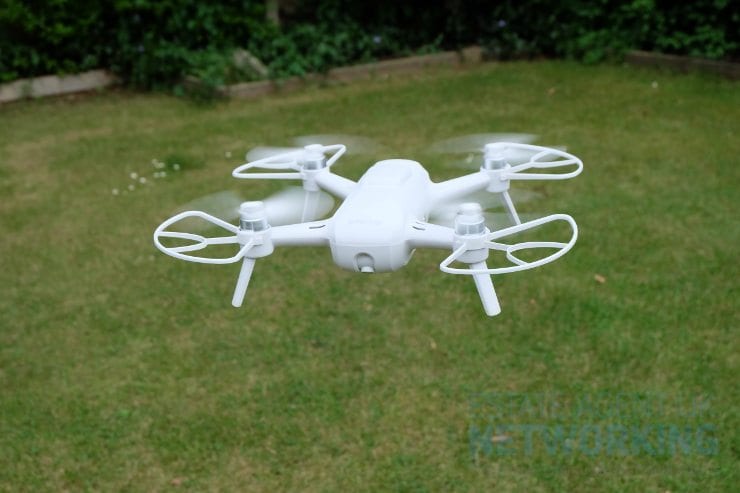
I work in many industry sectors and I am now starting to see more drones being used both commercially and by those for whom it is just a hobby. Are drones now more accessible for businesses than ever?
Increasing demand for drone services has led to many more service providers, from qualified individuals to large aerial imaging companies, coming in to the market. Whilst drones are available for the public to purchase, only a qualified operator who has received a ‘permission to conduct commercial operations’ from the Civil Aviation Authority, may use a drone for material gain. Anyone operating a drone for business purposes without the above is operating outside the law and may be liable to prosecution.
We work with residential, commercial and land agents, all of whom have found the cost of drone imagery to be at an affordable level. They have spoken of how the footage allows them to generate unprecedented levels of media coverage, keep up with the competition and offer a new perspective to potential purchasers. Drone footage incorporated in to sales videos is particularly impactful, two examples of recent commercial site projects can be seen here:
“The final cost of the service compared very favourably with alternatives, whilst there is no comparison with the end result, it is very impactful. King Street Commercial is delighted to be able to offer this level of video service to our clients.” Ted Murray – Partner, King Street Commercial
I can see that drones provide amazing footage both photography and video – Why should more estate agencies think about using companies like yourself to help increase their local business share?
Gareth Lay, Associate at Bruton Knowles, Shrewsbury, saw very clearly the impact of using aerial photography to market a 72 acre farm in Flintshire last month, saying
“I can genuinely say that your pictures have been the sole facilitator to an unprecedented level of press coverage. I have attached links to the various news articles, and I can assure you that they would not have got published without your pictures.
There is one paper in particular, the Farmers Guardian, where the article and the photo appeared on the front page. This would have cost around £3000 if we had paid for it! That’s 39,500 hard copy sales, plus all the online views.
The quality of the photographs have elevated the level of interest in the property marketing significantly. By providing potential buyers with a range of photographs it has cut down the number of telephone enquiries connected because they can more easily view the farm being sold. As a result of the range and quality of images, the property has gained significant press coverage, which would not have been the case using traditional ground based photos.”
As aerial imaging becomes the new gold standard it is important for companies to keep up, if not lead the field in their region. The option to use the pictures to generate media coverage is another added bonus.
Which drones do you use and why?
We currently use DJI F550 drones which carry GoPro Hero 4+ cameras. We use these drones because of their excellent cameras and gimbals. They are also stable and controllable in winds approaching 15 knots. The drones have the ability to take 12mp still photographs and supports video resolutions from 1080p to 4K. DJI drones are, in my opinion, the most reliable equipment on the market at their price point. We plan to upgrade to the DJI Matrice 200 series drones when they become available. Technology has moved on since we invested in our original drones. The Matrice 200 series offer huge improvements in battery life, camera capability and stability, while adding new features such as object avoidance, battery redundancy, multiple camera mounting points and the ability to fly in the rain.
I recently wrote an article on drone usage and despite mentioning the need to refer to the CAA for guidelines on usage, many drone companies were disappointed with this – Are there any other industry bodies out there for those using drones commercially in the UK and can you highlight the ‘rules’?
The Civil Aviation Authority are the regulatory body who cover commercial drone operators, who will:
Be over the age of 18
Demonstrate a sufficient understanding of aviation theory (airman-ship, airspace, aviation law and good flying practice)
Pass a practical flight assessment
Renew their license with the CAA annually
Hold and maintain an operations manual
Only a fully permissioned drone operator can gain insurance, so two key things to check if you are considering using a drone company are that they have their ‘permission to conduct commercial operations’ and insurance at an appropriate level.
Rules and regulations are revised regularly, so anyone wanting further clarification should contact the Civil Aviation Authority directly https://www.caa.co.uk/home/
Thank you to Ben Smith of www.kensson.co.uk for answering questions re Drones in Estate Agency.

You May Also Enjoy
Seven things to do if a tree damages your property

Leasing demand rises across all sectors
Don’t Put The Property Market On Pause
Before You Sign: 10 Things Home Movers Wish They Knew

Property expert warns homeowners to lock in amid mortgage rates uncertainty