Highest supply of homes for sale in eight years will keep house prices in check
Zoopla HPI reveals that the UK is currently experiencing the highest supply of homes for sale in eight years, which will keep house prices in check for the rest of 2024, and also predicts that the 4th July General Election will have less impact on the housing market than during previous election periods.
-
Supply of homes for sale is 20% higher than this time last year, with £230bn worth of housing for sale, up £45bn on this time last year
-
The average estate agent has 31 homes for sale – the highest level in 8 years*
-
4th of July election set to slow the pace of new sales in the coming weeks but there will be less impact than in previous election periods
-
Sales agreed are running 13% higher than this time last year but supply is growing faster, boosting choice for home buyers**
-
UK house price inflation currently stands at -0.1%. At a city level, it’s ranging from -3% in Ipswich to +3.6% in Belfast***
-
The higher supply of homes for sale is set to keep UK house prices flat over 2024
Sales are growing but fail to keep pace with growth in the number of homes for sale
The growth in supply, which is now at an eight-year high (compared to the same four-week period last year), has been driven by a rebound in the number of three and four+ bed homes for sale as existing owners return to the market and feel more confident to move. The average estate agent office has had 31 properties for sale, compared to 26 properties this time last year.
While most homes for sale are new to the market, 31% of homes for sale were marketed in 2023. Rising mortgage rates saw demand weaken, but homeowners have now returned to the market to seek a home move. This increase in the supply of homes for sale boosts choice for buyers and is expected to keep house price growth in check over the rest of 2024. Sales agreed are up 13% year on year, but across most regions the growth in new homes for sale is outpacing the growth in the number of sales being agreed.

One notable region that has seen well above average growth in the number of homes for sale is the South West. There are a third more homes for sale compared to this time last year. Tax and planning changes in relation to holiday lets and the prospect of double council tax for second homes are likely to exacerbate the increase in homes for sale in this region, which has the highest levels of second home ownership.
Election to have modest impact on the housing market
The general election in early July is expected to have a modest impact on housing market activity. There are currently 392,000 homes in the sales pipeline working their way through to completion over 2024. An increase in fall-throughs is unlikely due to the election announcement as there is not a huge divide in policy between the two main parties.
Some buyers early in the home buying process may look to delay decisions, but the underlying motivations to move remain strong for others who are likely to continue their search for a home and secure a sale in 2024. The pace at which sales are being agreed is likely to slow in the coming weeks which means the total number of sales for 2024 could drop below 1.1m.
House price growth – north/south divide continues
The north and south divide in annual house price growth continues with modest house price falls across Southern England. This split in house price inflation is most evident at a city level with the the strongest house price growth in Belfast (+3.6%), Burnley (+2.5%) and Bolton (2.4%), and the highest house price falls in Ipswich (-3%), Hastings (-2.7%) and Norwich (-2.4%).
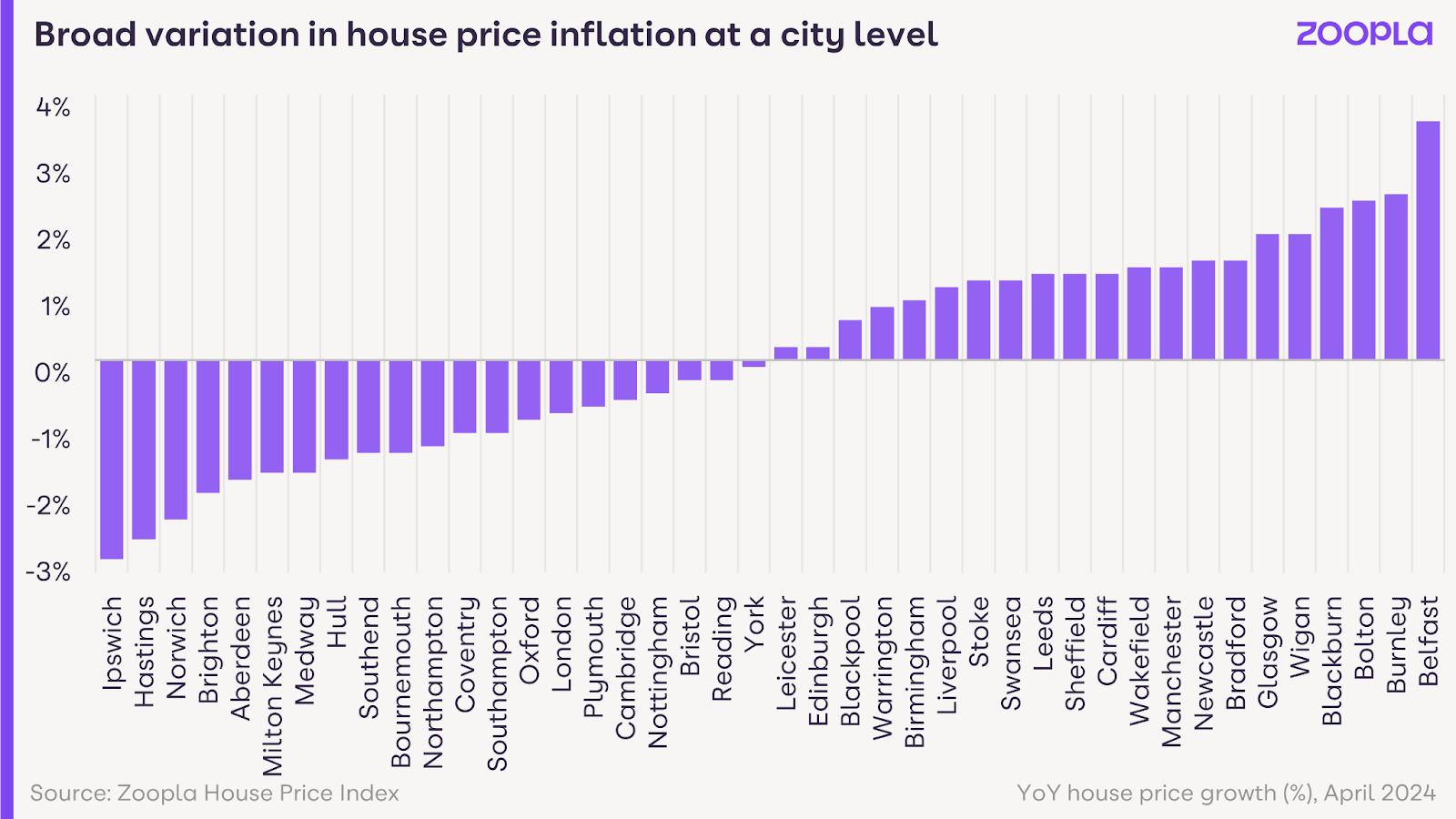
The variation in house price growth is primarily driven by affordability pressures in the face of higher mortgage rates. Across the south of England, price falls are focused on coastal cities and those where prices jumped higher over the pandemic during the ‘race for space’ where demand is now weaker. House prices are rising in cities with below-average house prices where the impact of higher mortgage rates is less pronounced.
Zoopla expects this north/south divide in house price growth to continue for the remainder of 2024 as incomes and house prices re-align across the country.
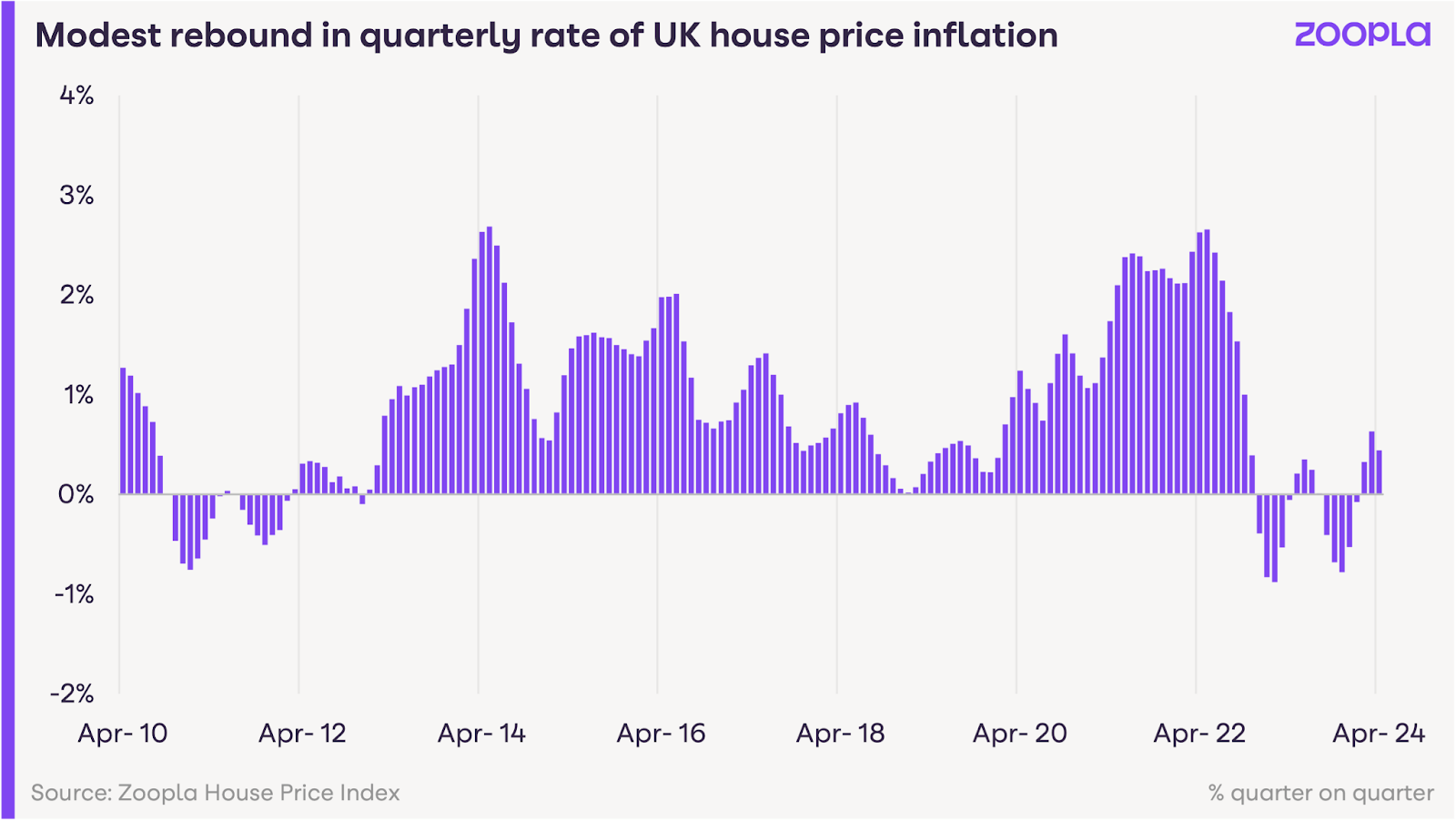
Commenting on the latest report, Richard Donnell, Executive Director at Zoopla says: “The growth in the supply of homes for sale is evidence of renewed confidence amongst homeowners, some of whom delayed moving decisions in 2023. The quarterly rate of house price inflation has picked up in recent months as more sales are agreed and prices firm. The announcement of the election will slow the pace at which new sales are agreed while greater choice for buyers will keep house prices in check over 2024. It’s essential that those serious about moving in 2024 price their homes realistically if they want to achieve a sale.”
James Toogood, Savills Director within the South West region comments: “The South-West, and coastal locations in particular, experienced record levels of interest year-round during the lockdown ‘race for space’, but we are now witnessing a market that has returned to seasonal patterns, with lower levels of properties available during the Winter and an uptick in vendors coming to market as the weather improves. This year we are also seeing vendors who have been adopting a ‘wait and see’ approach return to the market amidst signs that interest rates are falling. These vendors are typically looking to upsize or downsize within the same area.”

You May Also Enjoy

Seven things to do if a tree damages your property

Leasing demand rises across all sectors
Don’t Put The Property Market On Pause

Before You Sign: 10 Things Home Movers Wish They Knew

Property expert warns homeowners to lock in amid mortgage rates uncertainty