NPPF review is a chance to fix planning, build homes, restore wildlife and help SMEs
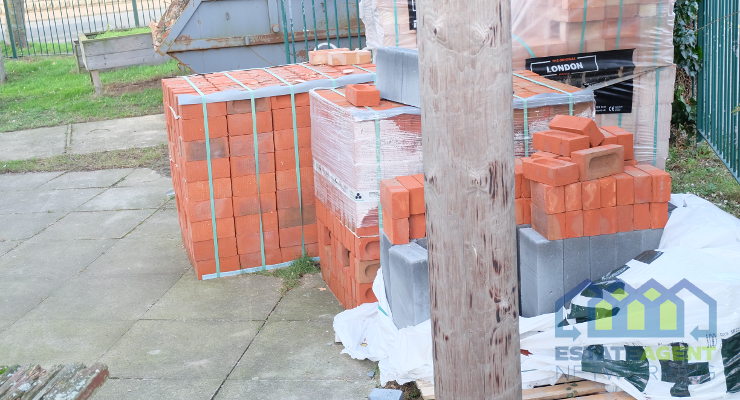
The latest National Planning Policy Framework (NPPF) unveils an ambitious package of reforms designed to speed up the planning process and make smaller sites more viable.
This includes trimming environmental regulations and cutting Building Safety Levy on smaller sites, as well as providing more funding to local authorities to process planning applications faster, whilst taking power away from planning committees and giving them to planners.
Richard Beresford, Chief Executive of the National Federation of Builders (NFB), said:
“We thank the Government for again listening to the industry on calls to review the NPPF and help small and medium sized housebuilders.
“Since the first NPPF review, a working paper to define Medium sized sites of between 10 and 49 homes was released and policies to assist SMEs have been consulted on. This review is therefore a key moment to bring previous consultations together and embed them in national planning policy.”
The Government’s planning review also includes the following proposals:
Making it easier for SME developers to build higher density housing, including a possible exemption from the Building Safety Levy on sites between 10 to 49 homes.
Creating a pattern book of standard housing designs in collaboration with local planning authorities so that investments in modern methods of construction are more certain for builders.
Biodiversity Net Gain (BNG) exemptions for smaller sites, reducing the complexity for SMEs.
Boosting the rollout of the Small Sites Aggregator in key cities, with funding to transform 60 small brownfield sites into social housing.
More funding being allocated to local planning authorities with the highest number of major housing schemes waiting for approval, largely in London.
Further reforms to modernise planning committees, so that smaller housing projects are decided by planners in accordance with local plans, with a consultation early next year.
This comes alongside previous pro-housebuilder reforms, which will go further to make planning more ‘rules based’ and housing denser, such as the default ‘yes’ given to dense housing developments near rail stations.
Rico Wojtulewicz, Head of Policy and Market Insight at the NFB, said:
“The 2024 NPPF review unpicked the last Government’s housing blocking policies and added vital reforms to deliver for large sites and infrastructure. However, it missed a chance to focus on SMEs which is why this subsequent review was needed.
“This NPPF review gives us an opportunity to realign the planning cogs and make planning policy more predictable and coherent. As contributing authors to the ‘Identifying Land’ section in the NPPF, it also offers us an opportunity to advise the Government how it can do more to help SMEs, while pushing for our Medium sized site proposal to be front and centre of their thinking.
“As well as the Government listening to our recommendations for another NPPF review, we thank them for accepting our recommendation to increase the Building Safety Levy (BSL) exemption threshold to 50 homes.”
The Government has proposed a BNG exemption for smaller sites, with a threshold of less than 0.2 hectares, and a consultation on a 2.5 hectare brownfield-specific exemption. With further announcements to come on simplifying offsite BNG to benefit medium-sized developments and a further response on nationally significant infrastructure projects (NSIPs), the Government looks keen to make sure smaller developments build by SMEs will continue to be viable.
Wojtulewicz, continued:
“The reforms announced on Biodiversity Net Gain (BNG) are welcomed and will help small projects, but the policy is still broken. For as long as it remains based on broad habitats and not ecosystems, it will continue to make projects unviable, while not doing enough for wildlife.
“We therefore hope to convince this Government to back our five-year campaign to support onsite solutions and strategies which directly support wildlife. For example, letting bee, bird and bat bricks, and lighting spectrums and plants which sustain food chains, count in the BNG calculator.
“It feels perverse that on the one hand the Government is saying new builds should include nature friendly elements to support wildlife but on the other have a BNG policy which discounts their benefits for wildlife.
“Our second ‘Building in Biodiversity’ report, set for release in the New Year, will tackle that issue and highlight how specific species can benefit from ecosystem strategies, where the BNG calculator should incorporate that and why it is the best way to restore the UK’s depleted biodiversity, while also facilitating 1.5 million homes to be built.
“Some say the UK BNG system is world leading but if it replaces plants, hedges and trees which local birds and bats don’t benefit from, ignores the benefits balancing ponds could deliver for crayfish and has no local wildlife consideration at all, how can it be world leading?”

You May Also Enjoy

Discover Northern Ireland’s top emerging investment hotspots

First-time buyers pay extra £307m in stamp duty since relief ended
Rental price and average salary tracker – March 2026

Breaking Property News 9/4/26

Six property firms expelled from redress scheme