


Real Estate & ‘Drones’ – Useful Information for Agents
August 24, 2018
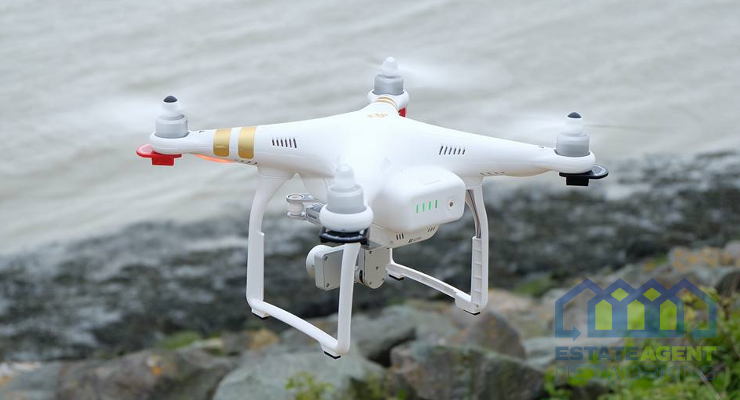
You simply can’t get away from them these days. They’re in the news, usually reported under ‘bad’ news rather than the good they bring, your friend may own one or you may have even bought one yourself. They have a few names dependant upon the aircraft; Unmanned Aerial Systems (UASs), UAVs, RPASs, etc. or as the media like to call them – ‘Drones’ – it seems like they’re everywhere.
Love them or hate them, one fact is undeniable and that is that drones continue to ‘fly high’ within industries that have embraced them and continue to make headway in to new market opportunities.
Marketing in general, but in particular within Real Estate, has become a large consumer of UAS service providers and although tempting as it may be for Estate Agents to pop down to the nearest shop that sells the latest and greatest drone out there to take some footage for their client themselves, it’s not quite as simple as that.
And this is why.
A drone is in actual fact an ‘aircraft’ and from a Commercial standpoint, requires the ‘Remote Pilot’ (the person in command of the aircraft) to;
1. Have successfully completed the appropriate training with a Civil Aviation Authority (CAA) approved National Qualified Entity (NQE) and be certified by the NQE that they are competent pilots and have the required standard of knowledge and skills as set out by the CAA
2. Have the mandatory insurance in place which is in accordance with the requirements of regulation (EC)785/2004 (the minimum level of insurance cover required for all air carriers and operators) and includes at least the minimum amount of Liability insurance for the individual operation to be conducted
3. Be approved by the UK CAA by way of Permission for Commercial Operations (PfCO) – note this is not a license but is based on a permissions and exemption system and is the current industry standard
As recently as 30th July 2018, new regulations came into force that tightened up the law with regards to flying an unmanned aircraft in UK airspace and further regulation and law is currently planned for late 2019. Expect this to continue.
So unless you’re fortunate to have an employee in your own Estate Agent that holds a PfCO, insurance and their own aircraft, it really is necessary to hire a professional operator to undertake any aerial footage on your behalf, otherwise the law could be broken.
Additionally, partnering with a UAS operator to take aerial footage on your behalf ensures that firstly, you as an Estate Agent are operating within the law but secondly, this approach future proofs your business as you leave all of the regulatory items, insurance requirements and all other aviation nuances to the professionals.
Written by: Neil Rutter – neil@gorilladrones.co.uk

You May Also Enjoy

Mortgage approvals up in February
The latest mortgage approval data from the Bank of England show that: – Mortgage approvals on house purchases for February sat at 62,584 up (3.9%) from 60,246 seen in January. Approvals are down (-3.9%) when compared to the 65,114 seen in February 2025. This annual decline was expected due to wider market slowdown and economic…
Read More 
Pain for landlords as buy-to-let borrowing costs soar
Buy-to-let fixed mortgage rates are soaring due to unrest in the Middle East, according to Moneyfactscompare.co.uk. Landlords also face further financial challenges over the next few years, to meet new private rental rules. Average buy-to-let fixed rates over a two- or five-year term have risen since the start of March 2026. The two-year rate is…
Read More 
Breaking Property News 26/3/26
Daily bite-sized proptech and property news in partnership with Proptech-X. Average house prices in England are 7.6 times the median average salary The house-price-to-salary ratios in England continue to see a gradual decline post Covid-19 spike Following today’s release of the ONS Housing Affordability in England and Wales: 2025 data confirming that median average…
Read More 
Households facing £114 council tax increase
The latest research from eXp UK shows that the average household could see their council tax increase by £114 over the next year following increases of up to £986 over the past ten years. At the beginning of April, the majority of local councils are expected to put council tax up by 4.99% – the…
Read More 
UK House Price Index for January 2025
The latest index shows that: The average monthly rate of house price growth in January was -0.3%. Average UK house price annual inflation was 1.3% in the 12 months to January 2025. As a result, the average UK house price currently sits at £268,000. Here are some thoughts from the Industry. Damien Jefferies,…
Read More 
Exchange time reaches 135 days
Property transactions slow as exchange time reaches 135 days — up 45% on 2019 The time it takes to exchange contracts has risen to 135 days — 45% longer than in 2019 and 3% higher than last year — despite a drop in property transactions year-on-year, it emerged today. Novus Strategy, the transformation consultancy for…
Read More