New-build stock continues to fall as demand subdued
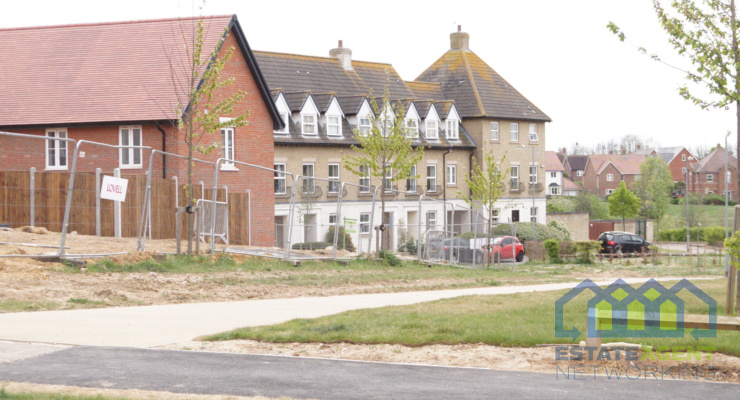
The latest analysis from Property Inspect has found that demand for new-build homes remained subdued during the second quarter of 2026, with just 16.3% of available new-build properties securing a buyer. At the same time, new-build stock levels continued to decline, accounting for 5.8% of all homes listed on the market across Great Britain.
Property Inspect analysed current market listings across 20 major British cities to assess stock levels for new-build homes, and what proportion of them managed to secure a buyer (sold subject to contract) in Q2 2026.
New-build stock in Q2 2026
The research shows that across Great Britain, new-build homes accounted for an average of 5.8% of all properties listed on the market through Q2 2026. This marks a quarterly decline of -0.5%, while stock levels were also down -0.2% on an annual basis.
Newcastle recorded the largest quarterly increase in new-build stock, rising by +1.2%, while Leicester (+0.3%) was the only other city to see stock levels increase during the quarter.
The largest quarterly declines were recorded in Swansea (-2.1%) and Edinburgh (-2.1%), followed by Liverpool (-1.3%), London (-1.2%), and Portsmouth (-1.2%).
On an annual basis, Newcastle (+2.2%) saw the strongest increase in new-build stock, followed by Leicester (+1.5%), Bournemouth (+0.5%), Manchester (+0.4%), Leeds (+0.3%), and Liverpool (+0.2%). The largest annual declines were recorded in Swansea (-4.2%), Nottingham (-2.8%), Aberdeen (-2.6%), and Edinburgh (-2.5%).
Liverpool remained the city with the largest proportion of new-build stock, with such homes accounting for 9.2% of all properties listed on the market. Aberdeen followed at 8.5%, ahead of Newcastle (6.4%), Manchester (6.3%), and Edinburgh and Leicester (both 5.5%).
New-build demand in Q2 2026
Across Great Britain, demand for new-build homes stood at 16.3% in Q2 2026. This represents a marginal quarterly decline of -0.1%, while demand was down -1.8% compared with the same period last year.
Bristol recorded the strongest level of buyer demand, with 25.7% of available new-build homes securing a buyer during the quarter. Plymouth (21.3%), Nottingham (21.1%), Sheffield (21.0%), and Bournemouth (20.5%) also saw more than one in five new-build homes find a buyer.
In terms of quarterly growth, Swansea (+8.4%) and Bristol (+6.3%) saw the largest increases in buyer demand, while London (+1.9%), Newport (+1.8%), Glasgow (+1.5%), and Manchester (+1.4%) also recorded positive movement.
However, several cities saw demand weaken over the quarter. Portsmouth recorded the largest decline (-18.7%), followed by Sheffield (-13.1%), Southampton (-11.9%), and Edinburgh (-9.3%).
Looking at annual performance, Swansea enjoyed the strongest increase in buyer demand, rising by +15.1% compared with Q2 2025. Plymouth (+8.5%), Bristol (+6.6%), Bournemouth (+5.5%), and Nottingham (+4.5%) also saw notable annual improvements.
At the other end of the market, Southampton (-15.8%), Newport (-12.1%), Leicester (-9.0%), Portsmouth (-8.4%), and Edinburgh (-5.5%) recorded the largest annual declines in demand.
Leicester and Aberdeen saw the lowest levels of buyer demand during Q2, at 1.2% and 1.9% respectively, while Liverpool and Newport both recorded demand of 3.2%.
Sián Hemming-Metcalfe, Operations Director at Property Inspect, commented:
“While the overall picture remains relatively stable, the continued decline in new-build stock suggests that developers are bringing fewer homes to market in some areas, even as buyer demand remains selective.
What stands out this quarter is the contrast between local markets. Some cities are seeing buyers engage with new-build homes at a healthy rate, while others continue to face much tougher conditions. This reinforces the importance of understanding local demand dynamics rather than relying on a national picture alone.
Today’s buyers are taking more time to assess value, quality, and long-term confidence before committing. In that environment, transparency and trust remain essential. Developers who can demonstrate quality and provide reassurance throughout the buying process are likely to be best placed to convert interest into sales.”

You May Also Enjoy

Residential projects remain under pressure

Homebuyers hold tight ahead of Autumn Budget

House price growth accelerates in Q2

House prices hold steady despite impact of higher interest rates

Breaking Property News 5/10/26