Are all followers, fans and friends created equal?
The closer the relationship the better right? Well not entirely, rather it could be your weaker connections where the greatest gains may lie. Read on to find out how weak ties can help harness the power of your undiscovered network.
Since Mark Granovetter’s 1973 paper, “The Strengths of Weak Ties” many people have been aware of the power of weak ties. So what is the concept, how does it translate into the digital age, and how can Estate Agents use it to their advantage?
According to Granovetter, the people within your social circle are called “strong ties.” Your “weak ties” are acquaintances that you have casual or infrequent contact with. Granvetter’s theory is that close networks typically have access to similar resources, whereas interacting with those outside of your immediate network can open you up to more diverse groups of people and information. Essentially, the more weak ties you have, the more likely you are to be exposed to new opportunities. In an industry heavily driven by personal referrals, expanding your reach into new communities can be extremely powerful for business.
The theory works in everyday situations. The conversation you have with an acquaintance at a networking event can be classed as a weak tie. You may not know this person well, but you’re now on their radar and have the chance to be exposed to people and opportunities from within their network. You might share your business card with them and the interaction could later result in them mentioning you to a friend looking for an Estate Agent.
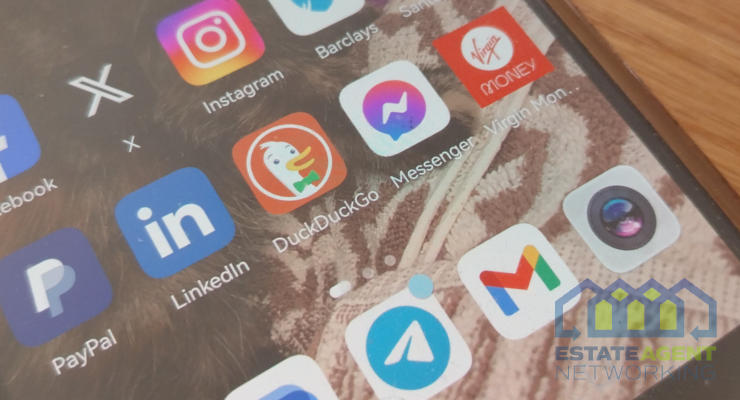
This idea can really take flight on social media, where you can more readily expand your circle of influence. With the average internet user now having 669 social ties, social media is the tool to utilise your weaker ties. Planning social media with this concept in mind may help you build, maintain and exploit a large undiscovered network.
An interesting study found that one-way relationships between Twitter followers make it more likely that a follower will re-tweet or share your content. Perhaps surprisingly, stronger relationships are less likely to re-post messages. In fact, the study shows that weak social media ties are 50 percent more likely to re-tweet content than stronger relationships. It is your weaker social media ties that have access to a more diverse range of followers and therefore play a greater role in how many people your content reaches.
So how can you use the concept of weak-ties to your advantage on social media?
• Initially look to build a broad network, seek out diversity, and listen to your weak social ties. Avoid focusing on the number of followers, instead focus on the diversity of followers.
• When considering content to publish or curate, be open to new concepts, ideas and people that may not necessarily be your usual or primary focus. Your aim is to take advantage of variety and contribute material that will appeal to your weak ties own networks.
• Share content with high informational value that people will want to share with their own networks. Everyone wants to build their own reputation online, so feed your network with useful information they can re-post.
• Build a community outside of your immediate network by blogging. Blogs can provide considerable value to others and can draw in new people that may not have otherwise connected with you.
Originally posted on propertyflock.co.uk
Propertyflock is a news curation and social media lead generation platform designed especially for property professionals. Know which content is most likely to generate interest and engagement on social media. Find out more: www.propertyflock.co.uk

You May Also Enjoy

Gap between house prices and earnings narrows

New Scheme Could Double Solo Buyer New-Build Options

Annual house price growth halves in September

Homesellers say valuation appointment is key
London’s rental market bucks the national trend