


Construction output rise is led by housing
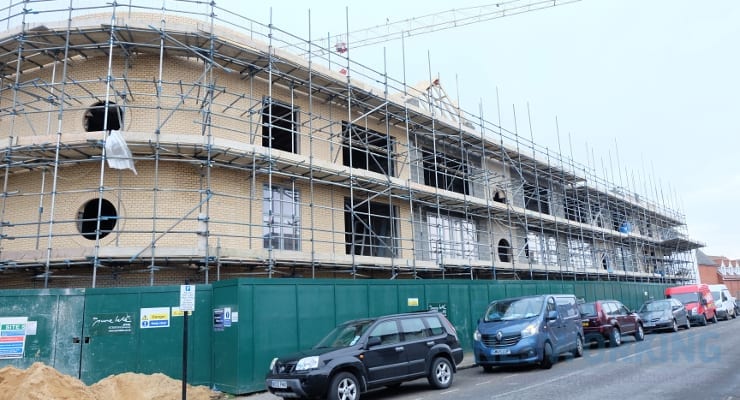
The Latest IHS Markit/CIPS Construction PMI report – November 2017 rose to 53.1, up from 50.8 in October and beating forecasts of 51.2.
The report out today headlines ‘Construction output rises at fastest pace for five months, led by housing’, the report mentions that the improvement in construction growth was largely confined to residential work.
The report mentions: House building projects were again the primary growth engine for construction activity. Survey respondents suggested that resilient demand and a supportive policy backdrop had driven the robust and accelerated upturn in residential work.
Tim Moore, Associate Director at IHS Markit and author of the IHS Markit/CIPS Construction PMI said:
“UK construction companies experienced a solid yet uneven improvement in business conditions during November. Once again, resilient house buildinggrowth helped to offset lower volumes of commercial work and civil engineering activity.
“Survey respondents noted that residential projects underpinned the rebound in total new order growth to its strongest since June, helped by strong demand fundamentals and a supportive policy backdrop.
“Construction firms reported that heightened economic and political uncertainty continued to hold back commercial development activity. The latest drop in civil engineering was linked to a recent lack of tender opportunities for infrastructure-related projects.
“Business optimism across the construction sector remained relatively subdued, but picked up from the near five-year low seen in October. This represented the first improvement in confidence for three months, which construction firms attributed to increased sales enquiries and hopes that risk aversion among clients will recede over the course of next year.”
Duncan Brock, Group Director Customer at the Chartered Institute of Procurement & Supply, said:
“At last the construction sector, has picked its feet up with the biggest overall improvement in five months, underpinned by a moderate rise in new orders, but the strongest since June.
“It appears that policy support and a small recovery in the UK economy has boosted sentiment and encouraged clients to come out of their shells and start building again. The housing sector was the primary driver of growth increasing at the fastest rate for almost half a year.
“However it is private sector companies that need to commit to big ticket spending, with commercial development still underperforming as persistent Brexit uncertainty continues to bite. Concerns over civil engineering in particular are also prevalent with its downward course the longest since 2013 and linked to a shortfall of new tender opportunities.
“Across construction supply chains, delivery times have been under pressure, as materials were in higher demand, while stocks remained in short supply. Lead-times from vendors have now deteriorated in every month for over 7 years.
“Overall, the sector showed an incremental improvement, but business optimism was on the rise and up from last month’s five-year low. Perhaps the darkest days are behind the sector with fresh impetus on the horizon for the New Year.”
Read the IHS Markit/CIPS Construction PMI – November 2017 report published 4th December 2017 in fulll click here.

You May Also Enjoy

Higher mortgage rates put buyers in the driving seat

Prime London buyer demand cools in Q3

Breaking Property News 30/9/26

We’ve got the visitors. Now we need your listings.

Housing market hit by £18m increase in fall-through costs in Q2 2026
