High Street Estate Agents: Fight or Flight?
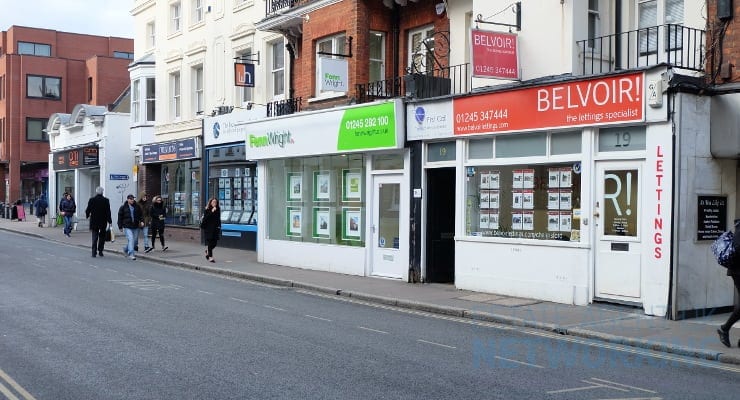
The rise of the online estate agent has disrupted the industry, contributing to 150 high street estate agent closures and 7,000 deemed at risk. And even though the online agency share still only equates to around 8% of the property market, it is a figure that looks likely to increase over the coming years.
It’s evident that the geographic spread and inherent low cost of online estate agents has caused a reduction in the amount of high street estate agent instructions, as highlighted by dwindling profits for beleaguered estate agents Foxtons and Countrywide.
And with a gloomy economy, political unrest and tax changes for landlords, property owners are reluctant to list their home for sale whilst consumers are hesitant to invest.
Since high street estate agents only get paid on completion via a commission (a percentage of the property sale price) this has led to lower income streams whilst expenses remain the same.
But considering high street estate agents already have an established brand, employees, a portfolio of listed properties and a database of prospective buyers, what can they do to relieve the financial pressures and continue to prosper?
Ditch the Costly Office Space
I remember reading an article a while ago about a woman who thought she was being overcharged when she paid £2 for hot water and a slice of lemon. The café owner spoke quite candidly about why it cost so much and noted the necessity to factor in business rates such as rent, energy bills and bank charges when pricing the liquid refreshment. Of course, the cost of making such a drink at home would be much less, which only serves to exemplify how businesses with a high street presence must charge the consumer more when selling their product.
When we relate it to estate agency, this is one of the main reasons why paying commission is so expensive. Consumers are not just paying for a personalised service but contributing to somewhat unnecessary operational costs.
Since a high street presence for estate agents merely provides an environment for business liaisons, why not meet consumers in their home instead? Potentially in the very asset that is being sold? Not only will this provide an even more personalised service, but it could potentially expedite niggly issues with ID/documentation, listing accuracy and save the consumer a considerable sum in the process!
Alternatively, for those that are hellbent on having a high street presence, why not hire some flexible office space that charges by the hour as opposed to weekly/monthly fees? Some even throw in free cake!
Without an office on the high street, staff members could work from home with flexible working hours. For the modern lifestyle, remote working should be encouraged and would be a fantastic incentive to retain staff or employ new staff. And to facilitate this change IT infrastructure could be migrated to the cloud.
The costs that can be saved on rent, electricity, gas, water, IT infrastructure, stationary, furniture, tea, coffee, milk and other consumables can add up significantly over the course of the year.
Relinquish the Expensive Cars
Accompanied property viewings can still be performed without company cars.
Allow staff members who don’t own a vehicle to visit properties on foot or on a bicycle, much like Deliveroo and similar business models. Those that own a vehicle can claim mileage expenses. Not only will this reduce operational costs, but the business will become more sustainable.
The money that can be saved on company vehicles including rent, fuel, branding them, insurances and otherwise could provide significant cost savings.
Embrace Technology
Being from an IT background there is always discussion around doing things in a “leaner” way, by maximising consumer value whilst minimising waste. Automation can save time, money and preclude human error. Many IT and banking organisations are shifting to robotic process automation (RPA) to automate repetitive tasks. And this mindset needs to be transposed over to high street estate agents if they are to survive and thrive.
Front-end online offerings should be developed to enable consumers to book valuations, track progression, monitor feedback, schedule viewings and make offers. And back-end solutions need to automate processes such as requesting viewer feedback, notifying prospective buyers of properties that match their search criteria and more.
Discourage Prehistoric Working Practises
I recently read a comment from a high street estate agent suggesting that a good working practise to prove locality is to hand deliver a confirmation letter when a valuation has been booked in for a consumer. Really?
In my opinion people in general, let alone millennials, don’t want to see a pointless piece of paper delivered through their letterbox confirming something they already know. An automated text message, an email or a phone call would suffice. Even a calendar invite. Or all the above! But don’t waste time, paper, energy, fuel and money driving out to hand deliver a letter which confirms an appointment. This is time that could be better spent finding a house buyer.
But Then We Become Another Online/Hybrid Estate Agent?
I suppose in a sense that’s true. But this is the exact business model that many online estate agents are trying to replicate; a model which provides the same personalised service but strips out unnecessary operational costs and saves consumers thousands of pounds.
The opportunity that high street estate agents have is that many online estate agents suffer from poor execution. Engagement with the consumer can be sloppy. The quality of property listings is sometimes substandard. Local knowledge is often weak. And sales progression can be somewhat non-existent.
But unlike the online/hybrid estate agents claiming to operate such a business model, a high street estate agent will already have all the necessary skills and personnel in place with an existing reputation to prove it. And as such the transition is entirely feasible.
Final Thoughts
Many struggling high street estate agents have solid foundations and were once probably thriving institutions.
With some key changes and a slightly different business model they have the potential to thrive once more. But to do so, working practises must be adapted to accommodate a more modern method of thinking and tech-savvy demographic.
Company owners that are too proud to acknowledge and embrace change will no doubt fail in the turbulent years that lie ahead.

You May Also Enjoy

Gap between house prices and earnings narrows

New Scheme Could Double Solo Buyer New-Build Options

Annual house price growth halves in September

Homesellers say valuation appointment is key
London’s rental market bucks the national trend