

Renting an Apartment for Streaming and Gaming: What to Check Before Paying the Security Deposit
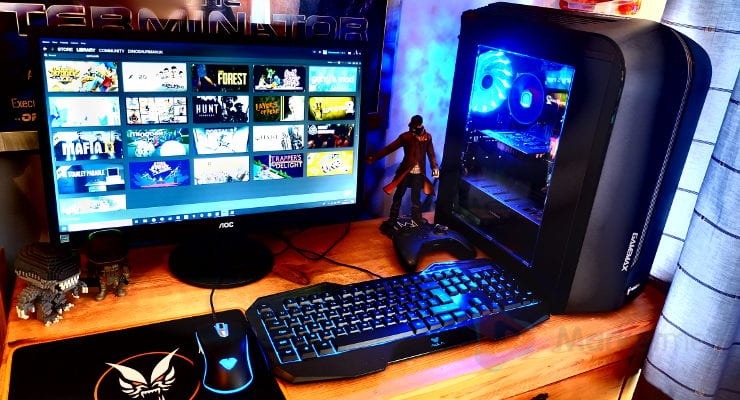
For those who stream or compete online from home, choosing a place to live becomes a task with many variables. Beautiful photos in a listing say little about whether an apartment is suitable for a home studio, stable livestreaming, and long hours in front of a monitor. The decision should be based not on the impression from a viewing, but on the results of a concrete inspection.
The essentials in brief: the room, internet, electrical, and a reasonable landlord
An outwardly attractive apartment can fail in practice if the room has a hollow echo, the internet only exists in the provider’s promotional brochure, running a cable is prohibited by the lease, and maintenance requests go unanswered for weeks. Below is a clear step-by-step inspection route, from acoustics to the electrical panel.
A viewing scene familiar to every streamer
The router sits on the kitchen counter, still wrapped in its factory tie. The agent enthusiastically talks about the walk-in closet, while the prospective tenant is already counting outlets in the office, planning the Cat6 cable route, and trying to figure out what’s on the other side of the bedroom wall. An ordinary tenant won’t notice even half of these details. For a streamer, any one of them could be the reason for moving out three months later.
Who actually needs all of this
It’s worth clarifying: everything listed below applies to those for whom gaming and streaming have become a profession. If someone spends a couple of hours at the computer in the evening to unwind, room acoustics and the load on the circuit breaker in the electrical panel are far from their top criteria when choosing a place to live.
This is especially true for fans of games with bonuses, where daily rewards, loot boxes, and holiday promotions are valued over a stable upload speed. On a reference portal that aggregates data on no-deposit bonuses in MMORPG titles, the fluff in descriptions is kept to a minimum, and experts note steady growth in interest in such mechanics in Final Fantasy XIV, The Elder Scrolls Online, and other titles. Claiming a login reward or participating in a seasonal event is perfectly doable from a laptop on the couch.
The only exception might be streamers who specialize specifically in that kind of content. Everyone else won’t need a dedicated room, and for those who go live regularly, evaluating an apartment starts with choosing the right spot for the setup.
First, the room for the setup — then everything else
The classic mistake is simple: sign the lease on an apartment you like, then try to squeeze a desk, microphone, and ring light into whatever space is left. It’s far smarter to mentally arrange your equipment during the viewing and run through a few key criteria.
Light and windows: how to avoid glare and shifting daylight
Window orientation plays a critical role. A sunny corner with three exposures looks impressive in photos, but in practice it creates glare on the monitor and constantly changing lighting on camera. A small north-facing window is often more practical for recording, because it provides even, diffused light without harsh shifts.
Noise and acoustics: what the microphone will pick up
Stand where you plan to place the microphone and simply listen. Here’s what deserves attention:
– Ventilation or air conditioning hum near the work area
– Echo in an empty room, amplified by high ceilings and bare walls
– A shared wall with a neighbor’s living room, through which bass penetrates in ways that ordinary acoustic panels can’t handle
Room shape, surface materials, and the presence of soft furniture affect sound just as much as square footage.
When the studio and bedroom share the same space
Combining two functions requires at least a visual and acoustic separation. A partition, half-wall, or thoughtful furniture zoning can prevent the room from becoming a constant conflict between workspace and sleeping area.
Internet in the specific apartment: don’t trust neighborhood advertising
Once the room works for you, the next potential deal-breaker is the real quality of the connection. The phrase “there’s a provider in the building” does not equal the stability needed for livestreaming.
What is actually connected in this apartment
During the viewing, find out what type of connection is run to this specific unit (coaxial, fiber), under what terms, and what is already installed versus what will require separate approval from property management.
What upload speed you need for your bitrate and parallel loads
The calculation starts with your target bitrate for 1080p60. Add to that video calls from household members, a smart home camera, and updates on a second PC. What matters most is upload speed and connection stability — not the impressive download figure in the ad.
Cable to the desk: figure out where the internet entry point will be in advance
The task isn’t just about having a connection. It’s important to understand how to physically run Ethernet to your workstation without hitting a dead end when it comes to proper cable routing.
Peak hours and slowdowns: how to avoid dropped frames on stream
Evening load on the channel can undermine any plan. Ask whether there are slowdowns during peak hours and how they manifest — dropped frames and connection drops are unacceptable for a livestream.
Three questions worth asking about fiber and providers
– Where the ONT (optical network terminal) is located and how convenient its position is relative to the desk
– Whether running a low-voltage cable is permitted and under what conditions — and make sure any approval is obtained in writing
– Whether there is an exclusive contract with a single provider and whether building approval is required to connect a new carrier
Ethernet instead of relying on Wi-Fi
Even with a good plan, quality can easily be lost due to the wireless portion of the home network. A wired connection eliminates interference and weak signal between the router and the desk, though it won’t fix provider-side congestion or outages.
During the showing, it’s useful to assess the distance from the router to the desk, the feasibility of running a cable without violating the lease, and the realistic possibility of testing the connection on the spot.
Electrical and load: outlets are there, but power capacity may not be
Two double outlets at the desk don’t guarantee the line can handle a sustained load. A typical streaming setup draws from a single circuit breaker: a main PC, a second streaming PC, a couple of monitors, a key light, a mixer or audio interface, USB hubs, and charging devices.
What to clarify:
– Which circuit breaker serves the room and what else is on that line
– Whether an electrician’s assessment can be arranged through the landlord
– A power strip increases the number of outlets, but not the circuit’s power capacity
Ergonomics over aesthetics: a workstation built to last
Hardware gets upgraded every year and a half. Your back and wrists don’t have that luxury. A desk depth of less than ~76 cm (30 inches) may not leave enough room for a monitor and keyboard. Window recesses create glare, and a forced awkward posture leads to chronic problems.
Yale Environmental Health & Safety publishes a concise workstation ergonomics guide covering monitor height, posture, and eye rest intervals.
Who your landlord is and what you’ll be allowed to do: questions before signing
How maintenance requests are submitted and who responds
– Where to write or call when a problem arises
– Who receives the request and how to get a status update
– Whether there is a single point of contact
Response times and emergency situations
– Who is on call outside of business hours
– What qualifies as an emergency and what the typical response times are
– How an HVAC breakdown will be handled in July heat or in the middle of a charity marathon
Whether modifications are allowed and how to get approval
– Whether installing a wall mount, monitor arm, or acoustic panels is permitted
– Whether written approval is required and what counts as a lease violation (for example, drilling into a wall)
Before the security deposit: a quick viewing checklist
– A specific corner or room for the desk and microphone has been chosen; light, echo, and noise have been checked
– It’s clear what internet is connected to this specific apartment and whether the upload speed covers the target bitrate with headroom to spare
– The location of the entry point/ONT is known and there is a legal way to run a cable to the desk
– There is a plan for a wired connection and an understanding of what can be tested on-site
– The electrical load has been clarified: the line, the circuit breaker, what else is on it, and the risk of overload
– The workstation fits in terms of size and ergonomics, without glare or a forced incorrect posture
– Clear answers have been obtained regarding maintenance, emergencies, and permitted modifications — ideally in writing

You May Also Enjoy
Renting an Apartment for Streaming and Gaming: What to Check Before Paying the Security Deposit

London rents outperform property values
Rental property availability falls
Average advertised rents surpass £1,400 for the first time

Barclays unlocks wider mortgage access for company directors