Zoopla Rental Market Report: rental growth at its lowest level for 30 months

UK rental growth slows to lowest level for 30 months, although there are still 15 people competing for every rental property
-
Rental growth has slowed to +6.6%, its lowest level for 30 months (Oct-21). The average monthly UK rent now stands at £1,226 per month
-
Rents have fallen over the last quarter in some key regional cities including Nottingham (-1.4%), Brighton (-1.1%), York (-0.4%) Glasgow (-0.4%), Cambridge (-0.3%) and London (-0.3%). This is being driven by factors including affordability constraints
-
There are still 15 people competing for every property for rent. This is more than double the pre-pandemic average (when there was an average of 6 people competing for each property)
-
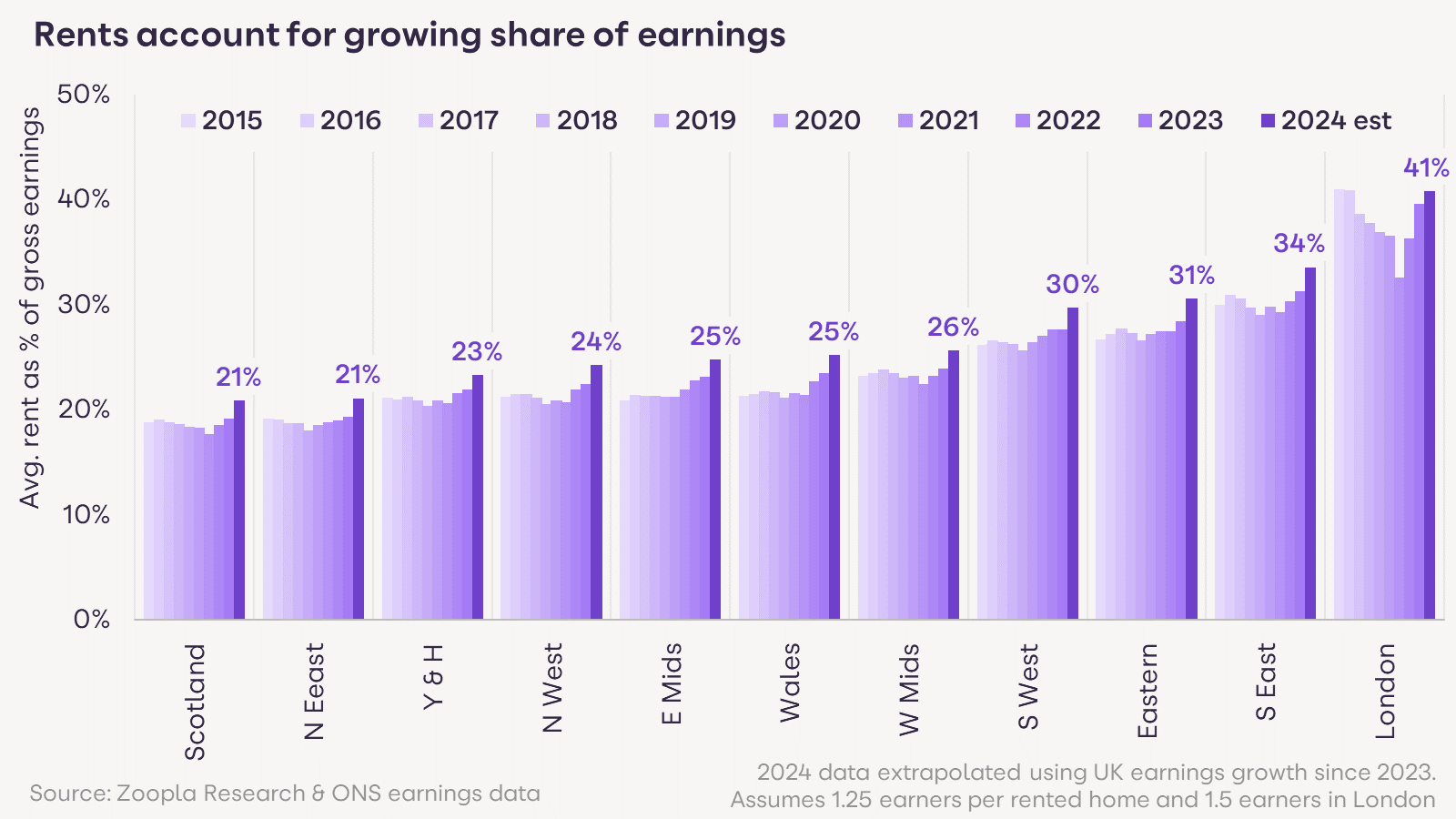
Affordability continues to be a growing challenge for renters looking to move home with the proportion of gross earnings spent on rent at the highest level for a decade across all regions and countries. This ranges from 41% of gross earnings spent on rent in London to 21% in Scotland
-
Ahead of the election, a lack of new investment in privately rented homes remains the biggest issue creating scarcity for renters – boosting the size of the rental market for both private and affordable homes should be a key focus area for the next Government
UNDER EMBARGO UNTIL 00.01 FRIDAY 7TH JUNE, LONDON: Zoopla, the UK’s leading property website has revealed that UK rental growth has slowed to +6.6%. According to its latest Rental Market Report, this is the lowest level in 30 months.
Competition for rental properties remains fierce, despite rental growth stalling in certain cities
Rental demand has softened over the last year but there are still 15 people chasing every home for rent, more than double the pre-pandemic average of 6 people. Available supply has grown by almost a fifth over the last year but there are still a third fewer homes for rent than over the pre-pandemic years due to low levels of new investment in rented homes.
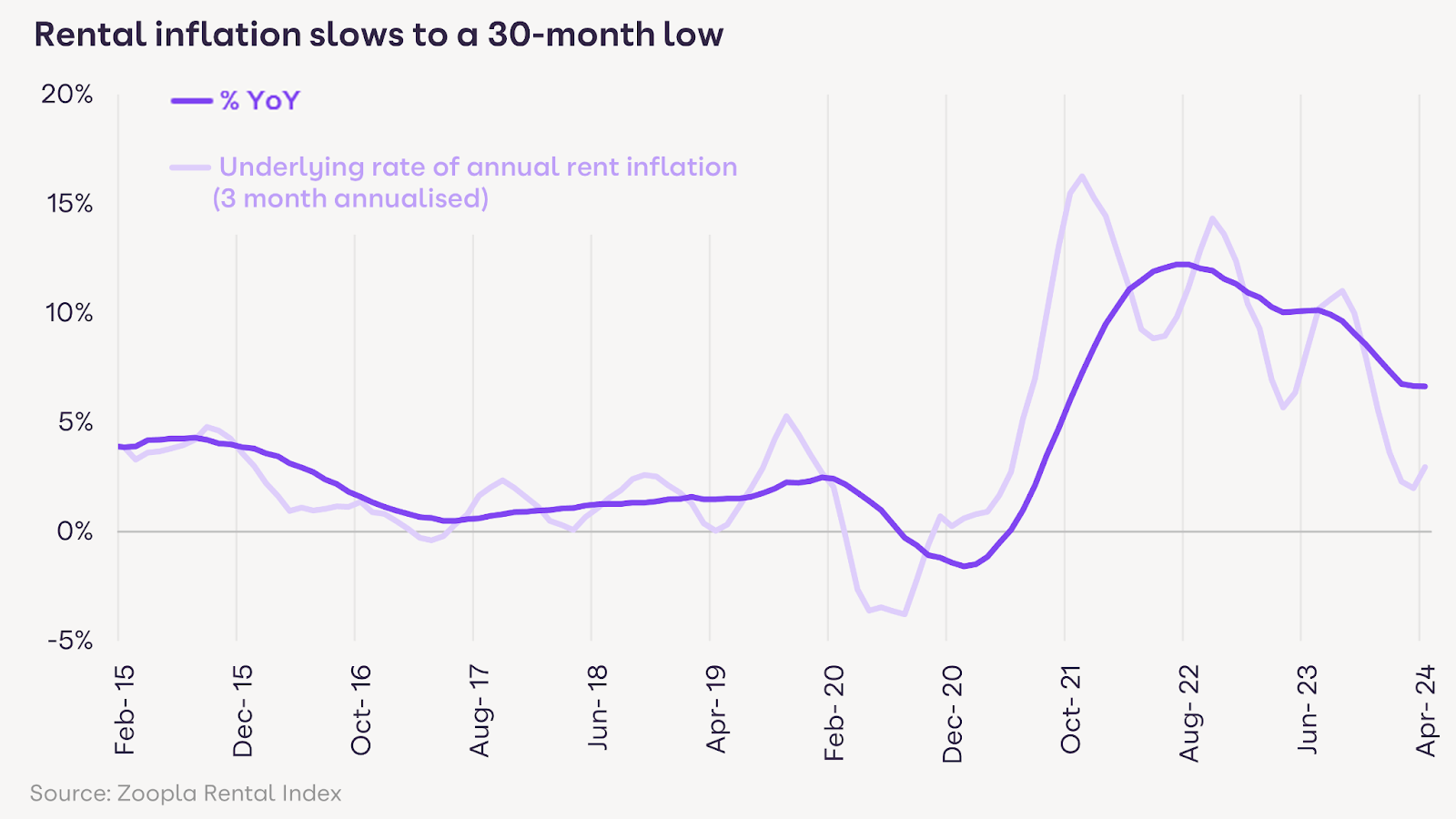
Rents have fallen over the last quarter across several regional cities due to localised supply and demand changes and affordability constraints in certain cities. Average rents have fallen slightly over the previous quarter in Nottingham (-1.4%), Brighton (-1.1%), York (-0.4%) Glasgow (-0.4%), Cambridge (-0.3%) and London (-0.3%). These are modest falls in the context of the rapid growth in rents recently, but it is clear evidence that rental market dynamics are starting to turn in some markets.
In London, there is an inner/outer split. Rental growth has slowed the most in inner areas with rents in Westminster and Tower Hamlets up by less than 2.5% over the last year and posting modest quarter-on-quarter declines. In contrast, yearly rents are up by over 10% in outer London areas such as Barking & Dagenham, Redbridge and Havering where average rents are 20% below the London average. The average rent in London is now £2,122, still significantly above the UK average of £1,226.
Wide variation in how much of average earnings are spent on rent
Despite the annual rate of growth in rents and average earnings narrowing overall, there’s a wide variation in how much average earnings are spent on rent.
This ranges from 41% of gross earnings spent on rent in London, to 21% in Scotland. This explains why rents are rising fastest in the North East and Scotland as rental costs account for the lowest proportion of gross earnings. In contrast, in London, the growing unaffordability of renting is starting to act as a drag on rental growth.
This unaffordability is also driven by a lack of supply in the rental market. The stock of homes in the private rented sector across Great Britain has remained broadly flat since 2016 at c5.4m. Although there hasn’t been an exodus of landlords, the levels of net new investment have been low which has stalled any growth in supply to meet higher demand. This has been compounded by 2016 tax changes and rising interest rates which have impacted the number of buy-to-let landlords. Despite this, Zoopla data shows a continued steady flow of homes for sale on Zoopla that were previously rented. This averages c.31,000 a quarter, a level that has remained broadly constant for the last four years.
What’s the outlook for the rental market for the rest of 2024?
The market is still on track for a slowdown in rental growth to 5% in 2024. This is being driven by changes in demand and affordability, rather than any expansion in supply which should be a key focus area for any incoming government.
While a General Election means the Rental Reform Bill failed to make it to the statute books, rental reform is still needed in the rental sector to improve the protections for existing renters. The big policy focus of a new Government should be on boosting the stock of homes for rent – both private and affordable – through increased housing delivery supported by additional funding and reforms to the planning system. This is the best option to improve the choice for renters and improve the quality of homes for rent. It’s important political parties set out specific policies to support the private rented sector in manifestos.
Commenting on the latest report, Richard Donnell, Executive Director at Zoopla says: “The increase in the cost of renting has slowed to a 30-month low. Rents continue to grow faster than average earnings although the gap is much narrower than a year ago. Rental demand continues to run well ahead of available supply which is keeping the upward pressure on rents but there are some areas where rental growth has stalled.
“The number of private rented homes has been static since 2016 which has compounded the rise in rents over the last 3 years. Growing the supply of rented homes, both private and affordable, should be among the top housing priorities for the next Government. A healthy private rented sector is vital for economic growth and a more balanced housing market. More supply is the fastest route to easing the pressure on renters and improving the overall quality of rented homes”
Nicola Thivessen, Director of Group Compliance at KFH said: “It is positive to see rental inflation at its lowest in 30 months, although demand for available property remains high, with supply still 1/3 lower than pre-pandemic. As we head into the peak summer period, the sector would benefit greatly from a continuation of more available homes to rent, which would help level out the ongoing imbalance between supply and demand, easing the pressure off tenants in terms of affordability.”

You May Also Enjoy
Conservatories fall out of fashion

95% of estate agents say homebuying reforms could speed up property transactions

Private rent and house prices, UK: July 2026

Tenant demand continues to strengthen in Q2

Breaking Property News 22/7/26