Why You Don’t Need to Worry About Online Estate Agents
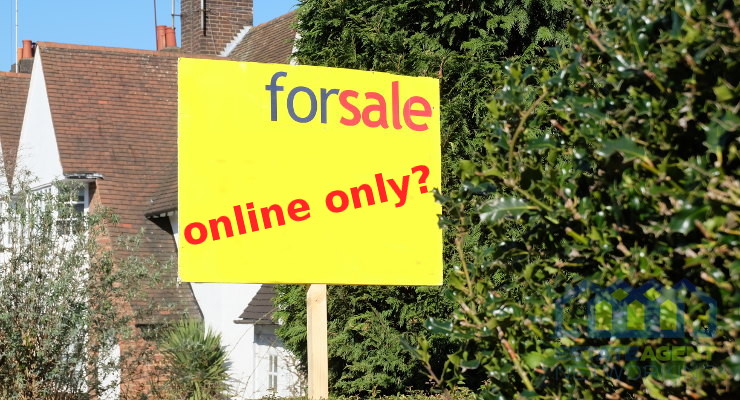
Our world is being overcome by the internet; it is spreading across our modern society and encompassing everything in our lives, from talking to friends to selling your house. The internet has revolutionised the property market, changing the way consumers think about property and how to sell, buy, let or rent. Online estate agents have grasped the opportunity given to them by the power of the internet in full force and have, for the most part, been successful. There has been an ongoing battle between the traditional high street agent and the online estate agents; with online claiming that traditionals are overpriced and out-dated, while the high street firms argue that online agents are impersonal amateurs.
It has been a little tense at times, but it doesn’t need to be.
While online agents are starting to break into the market and create new competition, the reality is that they still only hold approx 5% of the market. In comparison, high street firms, according to the HomeOwner’s Alliance consumer group, sell more than 84% of homes on the market.

But, despite these figures many in the industry are panicking about the potential threat from ‘onliners’. Especially since approximately 5,000 estate agents nationwide are showing signs of ‘financial distress’ as the internet continues to take our society by storm.
But should the high street be worrying about the internet?
Here are a 4 reasons why the traditional high street agent shouldn’t be overly concerned about the rising presence of online estate agents:
Keeping it Personal
One thing that online estate agents cannot challenge, is the personal rapport built between a consumer and a traditional estate estate. A short stroll down your high street and you are face-to-face with an experienced agent who can build a relationship with you and your home. In this growing online world it is nice to have a real conversation with someone, especially over something as important as your home. A high street agent offers a client the opportunity to just pop in to their local store at their convenience, something which cannot be offered by online estate agents since their offices are rarely open to consumers.
Albeit, high street stores are limited to local opening hours, whereas online agents typically have longer contact hours, often extending to 24/7. However, although they have a higher availability, they do not guarantee that consumers will be speaking to the same person each time, and clients may find that they are repeating themselves every time they pick up the phone.
Too many fingers in the pie, as it were.
Without a consistent point of contact, things can get lost and information can get muddled. High street agents offer stability and consistency with communication, something which cannot be established through a call centre.
Local Knowledge
It has been argued again and again that high street agents’ local knowledge is incomparable in the world of property. They are localised firms that specialise in their area and, more often than not, many of their employees will live close to the branch and consequently have a good knowledge of the local area. If you are looking to buy, then they can tell you all about the local amenities; how good the schools are, where the nicest restaurants are and how far your home is from a supermarket. Some may argue that these details do not help the sale of a property, however a YouGov survey carried out by TheHouseShop.com concluded that local information is key for buyers’ property search and something as simple as the distance from a supermarket can be highly important.
Pricing
I cannot deny that online estate agents are cheaper than the traditional high street agent. You pay a fixed fee, either upfront or upon completion ranging from approximately £645 to £1,699. This is in comparison to high street agents which typically charge up to 2% of the sale price (plus VAT).
Russell Quirk, founder of eMoov, states that:
“High street commission fees are outdated and anti-consumer as there is no real reason that someone selling at £850,000 should pay a great deal more than someone selling at £150,000 for the same service just because their property is worth more. These fees do little more than cover the bill for an excessive amount of office space in the same high-street and the fleet of company cars that go with them.”
Conversely, Jason Williams, a senior partner at Mallards Estate Agents argues:
“We understand that people can be initially attracted by the lower ‘internet cost’ of online estate agents, however people underestimate the positive effect a local estate agent can have on the actual sale of their house. Many times they can negotiate you a better price on the property as well.”
You need to bear in mind that these low costs, although they look appealing, are rarely the final price that you pay. The packages that are available often don’t include things like professional photography, floor plans, premium listings, or a viewing service. These are often available for an additional cost, pushing that initial cheap price up to the same levels as high street agents.
Furthermore, many online agents work on an upfront fee basis. This means that you are expected to pay for their service straight away, regardless of whether the property sells or not. Their low prices may draw you in, but if the sale isn’t successful then you are out a few hundred pounds and left back where you started. However, it must be noted that the online agents are adapting to the market and many have begun to offer a pay on completion offer, albeit at a significantly higher price.
This rise in fees actually means that the online estate agents, who scream about their cheap unbeatable prices, are actually getting closer and closer to the commision taken by a high street firm. With online prices as high as approx £2,000, if your property is worth £100K, then it would actually be as cheap, if not cheaper, to go with a high street agent that charges on average 1.5% of the sale price.
High street firms are arguably, more inclined to work harder for a higher sale price. Since they are paid through commission, they are arguably more motivated to work for a higher bid. Whereas online estate agents receive a fixed rate, their intentions may not be the same and they may be happier accepting a lower price if it means they can close the deal and get their ‘on completion’ fee.
Work Hard
With a traditional estate agent there is a correct assumption that they do everything for you. They take care of marketing your property all the way through from start to finish, with no expectation of involvement from the seller.
Whereas, Elliot, a spokesperson for WeBuyAnyHome.com acknowledges that
“If you use an online agent to sell your home, you may need to do a lot of the work yourself. For example, depending on which online estate agency service you choose, you may have to create your own property advert, manage and respond to buyer enquiries, arrange and conduct your own viewings, or negotiate with interested buyers to secure an offer.”
Essentially, you pay for what you get. With a lower price you must be prepared to put a bit of elbow grease behind your sale; the less you pay, the less you get.
Should traditional estate agents be worrying about online agents?
Estate agents are a staple of our local high streets and they are a clear fan favourite as proven by Haart’s survey of 2000 people, 90% of whom said that they would like traditional estate agents to remain on their high streets.
The chief executive of Haart, Paul Smith, has said that
“people like to be able to walk into a shop and speak face to face to a real person, and hand over their keys to someone they can trust.
“A high street agent will ‘vet’ both parties, which will protect them from fraud and also give the agent insight into how serious the potential buyer is about the property.
“Consumers know they can trust experienced high street agents to get the best price possible for them during the negotiating process and push the sale through by helping you with any potential problems that might crop up, whereas online agents are unable to offer that reassurance.”
Ultimately, an online estate agent is only as good as their ability to sell. If they sell your house then they are a very cheap and effective option. If the sale falls through then they are essentially
‘just very expensive listing sites’
So despite the growing threat of online estate agents, they are still relatively new to the game and most traditional agents are adapting to our ever-changing times, facing the competition head on. So, if I were you, I wouldn’t be too worried about the online firms.
There is a vast array of consumers out there who all want different things from their estate agents. It is the job of that firm to cater to their target audiences. Online and high street agents offer different services to each other and often appeal to different consumers. Where they overlap, it sparks a healthy competition that keeps both parties relevant and up-to-date. They can learn from each other whilst simultaneously proving themselves in comparison.
A bit of healthy competition never hurt anyone!
To stay relevant and competitive, why not sign up to list for FREE on TheHouseShop.com?

You May Also Enjoy
Homebuyers face longer buying timelines

Breaking Property News 1/4/26

What renters and landlords need to know ahead of major rental law changes
Tackling Empty Properties

Pet-friendly rentals plunge 39%