Energy Rules Without Power: Tenants and Landlords Both Question EPC Impact
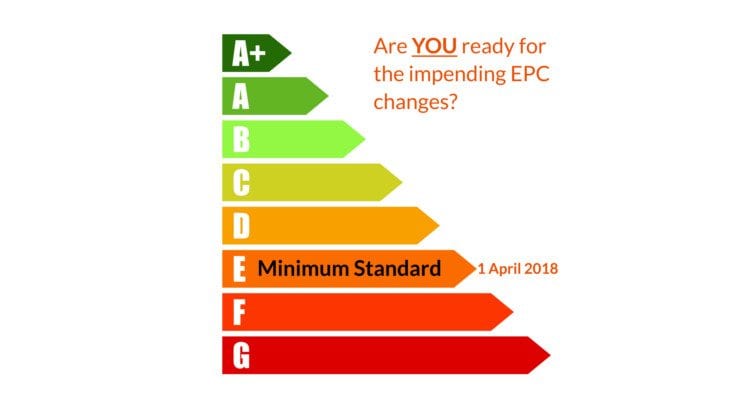
New research from LRG reveals that both landlords and tenants are struggling to engage with the Energy Performance Certificate (EPC) system, raising serious questions about whether it can deliver on its intended goals ahead of the government’s 2030 targets.
While landlords overwhelmingly support the principle of improving energy efficiency, confidence in the system designed to drive those improvements is faltering. Almost seven in ten landlords believe EPC rules should take into account the level of control they have over a property, particularly in leasehold flats and converted buildings, rather than applying uniformly across all property types. However, only 16% of landlords say they are very confident in the current EPC ratings, and even fewer trust the advice provided within them.
Worryingly, more than one in five landlords admit they either don’t understand the EPC advice or are unsure whether it’s relevant. Among those whose properties are not yet compliant, over a quarter say they would consider selling their property rather than upgrading it. This aligns with recent NRLA findings, which suggest that 40% of landlords would exit the market if EPC upgrades were to reach £10,000 per property.

Although 42% of LRG respondents say their rental homes already meet EPC C, a further third say they would only upgrade with financial support or not at all. Support schemes are in place, including the Great British Insulation Scheme and the Warm Homes Grant, as well as zero-rated VAT on energy-saving materials until 2027. However, these are often postcode- or eligibility-restricted and frequently undersubscribed, leaving many landlords uncertain and under-supported. As the system stands, landlords are not only wary of the cost, but they are also unconvinced by the process.

Tenants show similar signs of disengagement. In LRG’s survey, just one in four said the EPC influenced their decision to rent a home. A further third said they were aware of EPCs but paid no attention to them, while half of all tenants didn’t understand EPCs. When asked if they’d be willing to pay more for an energy-efficient property, 67% of tenants said they’d rather keep the rent low. Only a third said they would accept a modest increase for better energy performance. That’s despite wider industry research showing that up to 80% of renters now say energy efficiency is a key consideration when choosing where to live, and 70% say it influences whether they renew a tenancy. There’s an apparent mismatch between tenant attitudes in principle and their experience in practice.

Meanwhile, the government has reaffirmed its ambition for all privately rented homes to reach EPC C by 2030, with new tenancies expected to comply from 2028. The consultation on minimum energy efficiency standards closed in May 2025, and while many expect a phased rollout (possibly to 2033 or even 2035), the direction of travel is clear. Energy efficiency is shifting from ambition to requirement.
Allison Thompson, National Lettings Managing Director at LRG, commented, “Landlords aren’t resistant to energy improvements; many are already making them. However, EPCs in their current form don’t provide landlords with the confidence or clarity they need to act. The ratings often feel inconsistent, the advice is vague, and the cost of compliance remains unclear.
We also need to bring tenants into the conversation. Currently, most renters are unfamiliar with EPCs or have never considered them. That tells us the current system isn’t just underperforming, it’s invisible to half the market.
If EPCs are going to play a central role in decarbonising UK homes, we need practical reform, not just political. That means improving quality, incentivising investment, and rebuilding trust.”

You May Also Enjoy

Residential projects remain under pressure

Homebuyers hold tight ahead of Autumn Budget

House price growth accelerates in Q2

House prices hold steady despite impact of higher interest rates

Breaking Property News 5/10/26