

Four in ten homes see asking price reduced
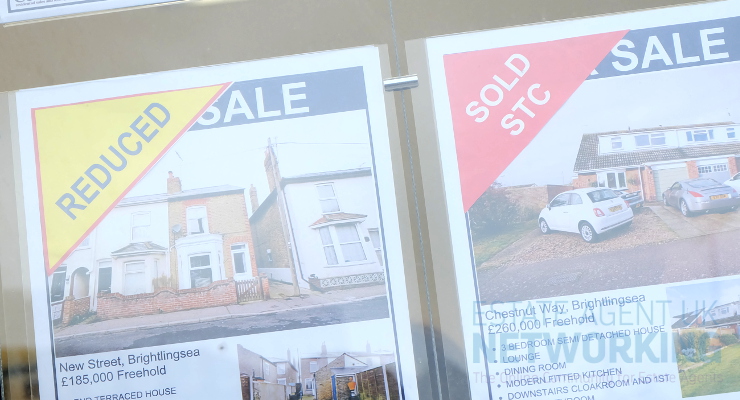
More than four in ten homes currently listed for sale across England have already seen their asking price reduced, according to the latest market analysis by eXp UK, with the number of reduced properties climbing by 3.6% since August.
eXp UK analysed property listings across England to establish how many have undergone an asking-price reduction. The firm then compared the findings with August 2026 to assess how the number of reduced properties has changed.
The research shows that 165,647 properties currently available for sale across England have already undergone an asking-price reduction, accounting for 41.0% of the 403,962 homes currently on the market.
This represents an increase of 5,786 reduced properties compared to August, when 159,861 homes were being marketed at a reduced asking price, with the total number of reduced listings increasing by 3.6% over the last two months.
South East leads for asking-price reductions
The South East currently has the highest proportion of reduced properties, with 43.9% of available homes having already seen their asking price cut.
The East of England follows at 42.2%, with the East Midlands at 41.7%. London and the South West also sit above the national average, with 41.2% of currently available properties having undergone a reduction in both regions.
West Midlands sees largest increase in reduced stock
When it comes to the change in the number of reduced properties since August, the West Midlands has seen the largest increase, up 7.7%, followed by the East of England at 6.2%.
The South West has recorded an increase of 4.8%, followed by Yorkshire and the Humber at 4.7%, the South East at 4.1% and the East Midlands at 3.8%.
In contrast, London has seen almost no change, with the number of reduced properties increasing by just 0.1%, while the North East has recorded an increase of 0.2%.
Head of eXp UK and Europe, Adam Day, commented:
“The fact that more than four in ten homes currently for sale have already undergone an asking-price reduction demonstrates just how important getting the pricing strategy right has become as tougher market conditions have materialised this year.
Of course, there will always be properties that require an adjustment during the marketing process, and a price reduction isn’t necessarily a sign that an agent has got things wrong. But with such a substantial proportion of available stock having already been reduced, it’s clear that many sellers are having to reconsider their initial expectations.
For estate agents, this makes the relationship with the vendor particularly important. Setting realistic expectations from the outset, providing regular updates on viewing activity and buyer feedback, and being able to demonstrate how a property is performing against the wider local market can all help vendors make more informed decisions.
Technology has an important role to play in supporting this process, giving agents greater visibility over their sales pipelines and helping them maintain consistent communication with vendors.
Ultimately, it’s about ensuring agents have the information and time they need to provide the best possible advice, rather than simply chasing instructions at the highest asking price.”

You May Also Enjoy
Four in ten homes see asking price reduced

Breaking Property News 19/10/26

Mixed signals in UK construction as contract awards rise, but starts fall

Estate Agents Brace for Rising Compliance Costs
The £2m Mansion Tax, ‘Renting for Now’, and Life Under the Renters’ Rights Act