House price growth remained resilient in April

UK annual house price growth picked up to 3.0% in April, from 2.2% in March
House prices were up 0.4% month on month
| Headlines | Apr-26 | Mar-26 |
|---|---|---|
| Monthly Index* | 554.8 | 552.7 |
| Monthly Change* | 0.4% | 0.9% |
| Annual Change | 3.0% | 2.2% |
| Average Price
(not seasonally adjusted) |
£278,880 | £277,186 |
* Seasonally adjusted figure (note that monthly % changes are revised when seasonal adjustment factors are re-estimated)
Commenting on the figures, Robert Gardner, Nationwide’s Chief Economist, said:
“UK annual house price growth picked up to 3.0% in April, from 2.2% in March. Prices increased by 0.4% month on month, after taking account of seasonal effects.
“Despite the uncertainty caused by developments in the Middle East and the subsequent rise in energy prices, the UK housing market has continued to regain momentum following the slowdown recorded around the turn of the year.
“This is somewhat surprising given that indicators of consumer confidence have weakened noticeably. GfK’s headline index has fallen to its lowest level since late‑2023, reflecting households’ more pessimistic views of the economic outlook and their own financial position over the year ahead.
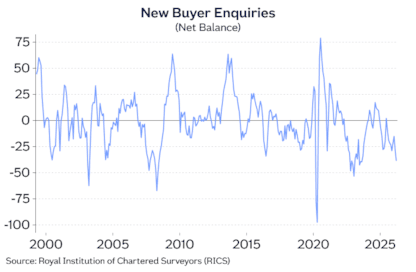
“Measures of housing market sentiment have also deteriorated. The Royal Institution of Chartered Surveyors reported a sharp fall in new buyer enquiries in March, taking the index to its weakest reading since 2023. This softening is likely to have been influenced by higher market interest rates following the onset of the conflict, alongside a more uncertain backdrop.
Why is the market proving so resilient?
“The market is likely being supported by the relative strength of household finances. In aggregate, household debt is at its lowest level relative to income for around two decades, and sizeable savings buffers have been built up in recent years, although these have not been evenly distributed across households.
“Moreover, housing affordability had been improving steadily in recent years due to a combination of income growth outpacing house price growth by a wide margin and a modest decline in mortgage rates.
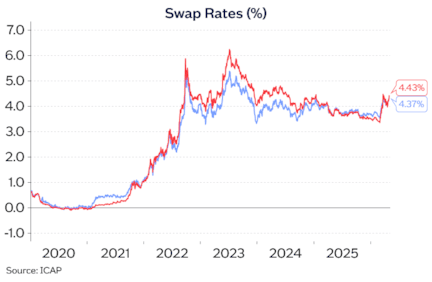
“While market interest rates have risen in recent months, the impact on affordability has so far been limited. Indeed, swap rates, which underpin fixed‑rate mortgage pricing, remain well below the highs reached in 2023 and are broadly in line with levels prevailing in late‑2024, implying only a partial reversal of earlier gains.
Where next?
“Looking ahead, UK economic growth is likely to be somewhat weaker and inflation higher than previously expected as a result of developments in the Middle East, although the ultimate impact will depend critically on the duration of the shock and the policy response.
“However, the UK economy and housing market have proved remarkably resilient in recent years. This provides some confidence that, if the latest shock passes relatively quickly, and energy prices normalise in the quarters ahead, any near-term softening in the housing market will also prove short lived.”

You May Also Enjoy
Gap between house prices and earnings narrows

New Scheme Could Double Solo Buyer New-Build Options
Annual house price growth halves in September

Homesellers say valuation appointment is key
London’s rental market bucks the national trend