Running a Successful Leaflet Distribution Campaign as an Estate Agent
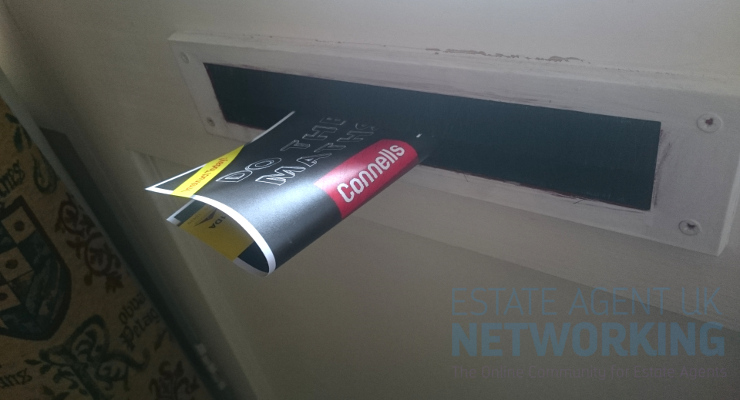
Have you ever thought about running a leaflet distribution campaign? As an estate agent you only make money when you have clients to work with. And finding those clients isn’t always the easiest thing to do. In fact, you likely spend more time marketing for new clients than you do selling their properties. Research shows that it takes a great deal more work to get new clients than it does to keep old clients. Unfortunately, in the estate agent business, keeping old clients isn’t as easy. You have to constantly look for new ones, but why a leaflet campaign?
Benefits of a Leaflet Distribution Campaign
For one thing, a leaflet distribution campaign is going to give you the opportunity to get your name out in front of far more people than you could any other way. Television ads are becoming less and less efficient as more people switch to paid services that don’t run ads. Newspaper and magazine ads are less and less efficient as people switch to online services to get their news and entertainment. Even billboards are becoming less efficient because people just aren’t paying attention. But what are people paying attention to? Their mail.
No one can completely tune out snail mail, even if it does tend to get a poor name for itself. Your bills come through the mail, right? And sometimes you get packages or other items that you really want to look at. Not to mention you still feel that compulsion to check the mail, every day. When you do, you flip through each of the items that are there and see if any of them require a little more attention. That’s where you can make sure that you’re getting your potential clients attention in a completely new way.
A leaflet distribution campaign means that you get to put your name and your services in front of a large audience of people and you don’t even have to do anything about it. You can simply set the location that you want your leaflets to be sent to and then sit back and wait for the results to come in. In fact, the simplicity of it is going to be similar to any other advertising method that you choose, but the results are actually going to be far better because you’re directly in the mailbox of your potential customers.
Also, when you’re using this method versus some of the other common methods of advertising you’re only getting your name out to people who are in your area. Advertising in a magazine typically means that you’re going to be paying for a far wider audience than can actually use your services. The same is true with television ads. For newspapers this may be true as well. You can only work in a set area, after all. But with leaflets you’re only paying to distribute your information to people that you have the ability to work with.
Setting it Up
If you’re interested in a leaflet distribution campaign you actually have a few different options. You could use the traditional letterbox delivery method that we’ve been talking about, but you could also choose to go with hand-to-hand, door-to-door or car-to-car distribution. Each of these methods has differing levels of success, differing costs and definitely differing opportunities. When you run a leaflet campaign you get to choose which one you prefer (or choose a combination of more than one) to get the best possible results.
Delivering leaflets directly to homes gives you the best return on investment, because you’re only delivering to people in your area. However, delivering hand-to-hand allows you the opportunity to talk with someone about your service before handing them a leaflet. This can actually give them an even bigger incentive to reach out to you because they know more about your service. Putting leaflets on vehicles can be another great benefit because it allows you to get your message out to a group of people in a specific geographic location, such as at a train station or a shopping centre.
When you look at the different methods that are available you can see that you’ll be reaching out to different groups of people with each method. And because your leaflets give them something physical to hold onto and look at they’re going to get more information about you and they’re going to remember it. They’ll be more likely to take that leaflet and put it somewhere that they can look at it again. Of course, there are a few different things that they could do with that leaflet once they’ve received it.
They may need your services immediately and because they just received that leaflet they could give you a call. Maybe they don’t need your services now but they think they will in the future. That means they’ll put your leaflet away somewhere they can find it in the future. Or they might know someone else who could use your services, in which case they may pass that leaflet on to someone else. No matter what they do, it’s going to potentially help you to get a new client, and you’re not actively required to do anything for your leaflet distribution campaign.
The best part of all of this is that you’re not directly responsible for anything. Just like any other advertising system you just set up the service and sit back and wait for the results. Unlike the other advertising systems you’ve likely tried, however, you’re going to get a better return on investment and a more niched audience to see what you have to offer. No more targeting an entire state when you can only serve a small part of it. And definitely no more paying for all that advertising when only a small portion is really even benefiting you. With leaflet distribution you’re only going to pay for the market that you actually want to target and that helps your business to thrive.

You May Also Enjoy

Renting an Apartment for Streaming and Gaming: What to Check Before Paying the Security Deposit

London rents outperform property values

Rental property availability falls
Average advertised rents surpass £1,400 for the first time

Barclays unlocks wider mortgage access for company directors