Six issues that make your property unmortgageable

The latest market insight from House Buyer Bureau has revealed six common issues that could see a homeowner’s property deemed unmortgageable by lenders, drastically reducing the pool of potential buyers and making it far harder to sell on the open market.
House Buyer Bureau analysed some of the most common reasons properties fail lender criteria, alongside the potential impact these issues can have on property value based on current market estimates and the latest UK average house price data.
Whilst the reasons a property may be considered unmortgageable can vary, they typically fall into three broad categories: structural problems, legal complications, and environmental or location-based risks.
Any issue that significantly increases the level of risk to either the buyer or lender can result in a mortgage application being refused, severely limiting the pool of potential buyers and, in many cases, forcing sellers to accept a substantial reduction in price.
Short lease properties
One of the most common issues facing homeowners is a short lease. Leasehold properties with fewer than 70 to 80 years remaining can struggle to secure mortgage approval, as lenders become increasingly cautious about the diminishing value of the lease over time. House Buyer Bureau estimates that this can reduce a property’s value by around 15%, equivalent to £41,832 based on the current average UK house price.
Defective titles
Poor historic conveyancing work, unresolved Land Registry discrepancies, or uncertainty surrounding ownership rights can all create significant legal complications for lenders. Depending on severity, these issues can reduce value by an estimated 12.5%, or £34,860.
Structural issues
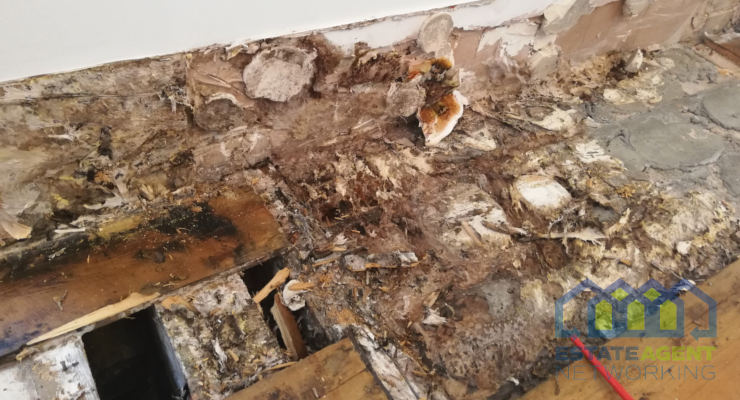
Structural problems remain one of the biggest red flags for lenders. Severe damp, subsidence, or major structural movement can render a property unsuitable security for a mortgage provider. House Buyer Bureau estimates that structural issues can reduce value by at least 20%, or £55,776 on average.
Non-standard construction
Properties built using non-standard construction methods can also struggle to secure finance. Homes constructed using concrete, timber framing, steel systems or other unconventional materials are often viewed as higher risk due to concerns surrounding durability, maintenance, and resale value. In some cases, values can be impacted by as much as 30%, equivalent to £83,664.
Environmental hazards
Environmental hazards are another growing issue within the market. Properties located in flood-risk areas or affected by issues such as Japanese knotweed can become significantly harder to mortgage. House Buyer Bureau estimates that environmental hazards can reduce property value by around 10%, or £27,888.
Spray foam insulation
Spray foam insulation is becoming an increasingly serious issue for homeowners attempting to sell.
Many lenders are now refusing mortgages on properties fitted with spray foam insulation within the roof space due to concerns surrounding ventilation, hidden timber damage, and difficulties assessing the roof structure.
In some cases, homeowners are being forced to pay for costly removal work before a sale can proceed and it’s thought the issue has impacted some 250,000 homes to date.
Managing Director of House Buyer Bureau, Chris Hodgkinson, commented:
“One of the biggest shocks for many sellers is discovering that an issue they may have lived with for years suddenly becomes a major problem once a buyer’s lender gets involved.
In the current market, lenders are being increasingly cautious, and anything that raises questions around value, structural integrity, legal ownership or future resale potential can quickly derail a sale.
What makes these situations particularly difficult is that many sellers only become aware of the issue once they’ve already accepted an offer and progressed deep into the transaction process.
At that stage, they’re often left facing significant delays, costly remedial work, renegotiations, or the collapse of the sale altogether.
In many cases, unmortgageable properties don’t lack value altogether, they simply fall outside of traditional lender appetite. However, it does drastically reduce the pool of available buyers and can leave homeowners struggling to sell through conventional routes.
As a result, we continue to see strong demand from sellers looking for a faster and more certain route to sale, particularly those dealing with properties that may prove problematic on the open market.”

You May Also Enjoy
Seven things to do if a tree damages your property

Leasing demand rises across all sectors
Don’t Put The Property Market On Pause

Before You Sign: 10 Things Home Movers Wish They Knew

Property expert warns homeowners to lock in amid mortgage rates uncertainty