Why UK holiday cottages make attractive property investments
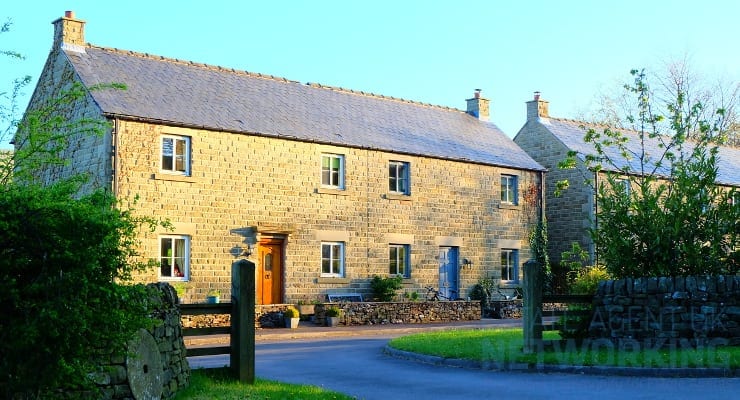
Are you considering investing in property? With the buy-to-let market no longer being the money maker it once was, thanks to the combination of a slowdown in the housing market, new taxes on rental revenue, stamp duty for second homes and stricter mortgage lending requirements, private landlords and residential property investors are now looking for new, better opportunities.
Furnished holiday lets in the UK could well be the answer. Offering tax benefits now unavailable for traditional buy-to-let properties, and with gross yields of up to 12% not unheard of, buying a holiday home is worthy of serious consideration.
Perhaps unsurprisingly, Britain’s beautiful coastal regions and the long, sandy beaches of East Sussex and Kent remain favourite tourist destinations. And with the recent fall in Sterling and the likely impact of Brexit, increasing numbers of holiday makers are predicted to be heading to UK holiday cottages.
What are the tax benefits?
One of the main advantages of renting out a furnished holiday home is the generous tax treatment compared to a regular buy-to-let property. While there’s no way of getting around the new, additional 3% stamp duty levy for all second home purchases, it is possible to claim mortgage interest tax relief and to offset the cost of furnishing and maintaining the property from pre-tax profits.
What’s more, holiday cottages run as businesses do not attract Council Tax, and with some professional guidance it is often possible to avoid local business taxes too. Finally, when the property is sold, you can minimise your exposure to Capital Gains Tax through a variety of tax reliefs.
The only condition is that the furnished holiday let (FHL) must be available to rent for at least 210 days per year, and let for a minimum of 105 days per year in order to qualify for FHL tax benefits. Lettings that exceed 31 continuous days must not be more than 155 days during any one tax year.
What rental yield can be achieved?
There are many factors affecting the rental income of a holiday property. If you are thinking of buying a holiday cottage, it is highly recommended that you scrutinise the vendor’s accounts before you commit to a purchase. In addition to the vendor’s figures, it’s wise to double check with an experienced local holiday letting agent to fully understand the sort of rental income you can reasonably expect to obtain.
Your total annual rental yield will depend on your occupancy rate during the season, which is typically 21-24 weeks long, although this can vary substantially depending on your location, selling proposition and target market. In Cornwall, for instance, prices peak at insane levels during the summer but trail off in the wintertime. In the Yorkshire Dales, on the other hand, properties get booked up all year round.
In sharp contrast to a regular buy-to-let property, furnished holiday accommodation comes with higher outgoings. In addition to mortgage payments, you will need to factor in insurance, utilities, cleaning and maintenance, plus property management fees if you’re unable or unwilling to deal with holiday bookings yourself. However, while as much as half your gross income could be taken up by your outgoings, it should still be possible to earn in the region of 6% net.
What’s the best location?
The right choice of location for your holiday property is key for a successful investment. Find somewhere in a good position in a popular tourist destination and see your rental income go stratospheric. A bargain investment, on the other hand, may turn out to be not such a bargain after all if no-one wants to stay there!
Carefully consider transport links and parking facilities, as well as the type of audience you are hoping to attract. Too much traffic nearby may put potential visitors off while a tucked away location may be too hard to find for some.
Next assess the proximity of the property to local amenities. How close is it to the beach, can you walk to the shops, are there pubs and restaurants nearby, what about countryside walks, golf courses, family entertainment and local tourist attractions?
What should the property be able to offer?
The holiday lettings business is heavily marketing led. Before you make a decision to purchase any holiday home, make sure you’ve done your homework to determine who exactly you are going to let to. In order to maximise your occupancy levels, you need to clearly define your target market and understand what they are looking for.
Are you going to cater for couples on romantic breaks, elderly couples with dogs, young families, hen party groups?? Holiday cottages with flexible bedroom accommodation and generous living areas are likely to attract the most bookings. Depending on the budget available for your property purchase, 2-3 bedroomed properties are ideal, especially if they offer en-suite facilities.
Of course, the appeal of a holiday cottage is that it is unique and charming, often offering features and quirks that our regular homes may not have. While year round heating should be a given, an additional woodburner or open fire provides that extra cosiness that many holiday guests crave. Fast internet access is another must-have unless you’re deliberately marketing your rural holiday cottage as a WiFi free digital detox! Finally, outdoor space is always welcome, even if it’s just a patio for breakfasting al fresco.

You May Also Enjoy
Homebuyer demand fall in Q3

Alterations can change a property’s rebuild cost

HMO conversions hit investors for £82,000 on average

Selling a HAUNTED house?

Renters call for greater transparency in HMOs