English Housing Survey 2024 to 2025

English Housing Survey 2024 to 2025: headline findings on housing quality and energy efficiency
The latest findings from the English Housing Survey on housing quality and energy efficiency. This is the second release of data from the 2024-25 survey. This report will be followed by a series of more detailed topic reports in the spring and summer of 2026.
Key findings
In 2024-25, 3% of households were overcrowded and 40% were under-occupied, according to the bedroom standard. Overcrowding has risen over the last decade in both the social rented sector from 6% to 9% of households, and in the private rented sector from 5% to 6% of households. Alongside, there was an increase in rates of under-occupation, and decreases in overcrowding, in the owner occupied sector.
There were 4.0 million dwellings (15%) that failed to meet the current Decent Homes Standard in 2024, similar to 2022. Compared to 2022, there were decreases in the proportion of dwellings failing the standard in housing association and private rented sector dwellings in the North West, and increases in the owner occupied and private rented sector dwellings in the South East.
There were 2.3 million dwellings (9%) that had a HHSRS Category 1 hazard in 2024, similar to 2022. Private rented and owner occupied dwellings were equally likely to contain hazards (9-10%), though two years ago, owner occupied dwellings were less likely than private rented dwellings (9% vs 12%). In the social rented sector, local authority dwellings (6%) were more likely than housing association dwellings (4%) to have hazards. In the owner occupied sector, vacant owner occupied dwellings (33%) were much more likely to contain hazards than those owned with a mortgage (8%) or owned outright (9%).
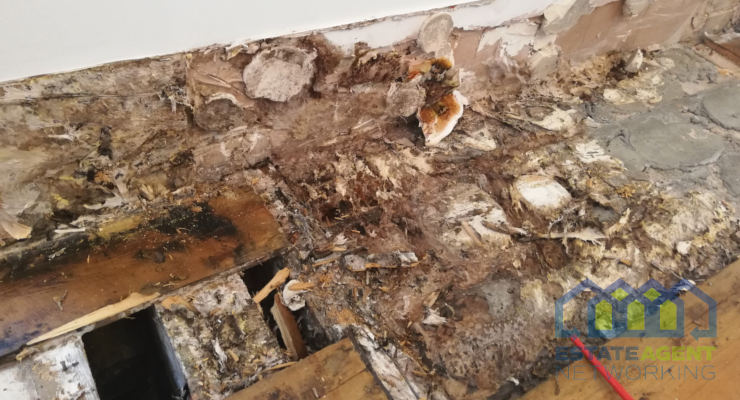
There were 1.4 million dwellings (5%) that had a problem with damp in 2024, an increase compared to 2022. Damp was more prevalent in the private rented sector (10%) than in the owner occupied (4%) and social rented sectors (7%). Local authority dwellings were more likely to have a problem with damp (8%) than housing association dwellings (6%). Since 2022, there have been statistically significant increases in damp in the owner occupied and social rented sectors. Damp was also more common in homes owned with a mortgage (4%) than those owned outright (3%). The most common form of damp was severe condensation (3%), which was more prevalent than rising damp (1%) or penetrating damp (2%).
Overall, the energy efficiency of the English housing stock continued to improve. In the last decade, the proportion of homes in the highest energy efficiency bands A to C increased from 26% in 2014 to over half of all dwellings (56%) in 2024, while the proportion within the lowest bands of E to G decreased (23% to 9%).
Over the last ten years, the proportion of dwellings with an energy efficiency rating of band D has continually decreased. However, in the last two years, the proportion decreased substantially (43% in 2022 to 35% in 2024), with a corresponding increase in dwellings rated band C (45% in 2022 to 52% in 2024). The pattern of energy efficiency varied by tenure.
In 2024, the estimated average cost to improve dwellings to at least an energy efficiency band C was £7,480 across all tenures, with owner occupied dwellings costing the most and social rented homes costing the least.
Rates of loft and wall insulation increased over the last ten years. Around 42% of all dwellings (with a loft) had loft insultation (over 200mm thickness), an increase from 38% in 2014. Just over half (54%) of all dwellings had cavity or solid wall insulation (up from 48% in 2014) and 89% of all homes had full double glazing, up from 81% of homes in 2014.
Nathan Emerson, CEO of Propertymark, comments:
“The latest English Housing Survey findings highlight both encouraging progress and persistent challenges in the quality and energy performance of England’s housing stock. It is positive to see long-term improvements in energy efficiency, with over half of homes now rated in the higher A-C energy bands and increasing uptake of insulation and double glazing. These trends will help cut bills and reduce carbon emissions, which are outcomes the property sector has long supported.
“However, the findings also reinforce areas of concern that must not be overlooked. Millions of homes continue to fall short of decent living conditions, with dampness, hazards, and overcrowding affecting significant numbers of households across tenures. Propertymark continues to support measures that drive improvements in housing quality and energy performance, but this must be paired with practical support for landlords and homeowners to make necessary upgrades.
“Clear guidance, targeted financial support, and sensible implementation timelines will be essential if we are to bring all homes up to modern standards without placing undue strain on households and the housing market.”

You May Also Enjoy
Seven things to do if a tree damages your property

Leasing demand rises across all sectors
Don’t Put The Property Market On Pause
Before You Sign: 10 Things Home Movers Wish They Knew

Property expert warns homeowners to lock in amid mortgage rates uncertainty