


Why invest in Dubai?
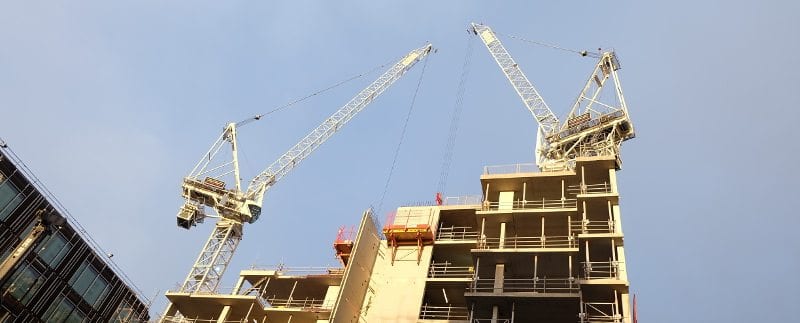
Brits accounted for AED4 billion of sales transactions (around £837m) in Dubai during the first six months of 2016 – the second highest out of 149 nationalities investing there.
So, what makes property investment in Dubai an appealing proposition for Brits?
The lifestyle
- It is a tax-free city, with no income tax or capital gains tax, making it attractive to people from all around the world to work – as well as invest in property – in Dubai
- Dubai is a popular tourism destination with its shopping malls (it has 70 shopping centres, including the world’s largest shopping centre, Dubai Mall), 5-star hotels, beautiful beaches and easy accessibility with direct flights from all the major cities in the world
- Dubai has a very low crime rate, so is attractive to families and HNW individuals
- English is spoken as a second language
- Wiki says that summers in Dubai are extremely hot, windy, and humid, with an average high around 41 °C (106 °F) and overnight lows around 30 °C (86 °F) in the hottest month, August. Most days are sunny throughout the year. Winters are warm with an average high of 24 °C (75 °F) and overnight lows of 14 °C (57 °F).
Property prices and the economy
Property prices are forecast to grow say property experts. Knight Frank say that Dubai property is set for a return to growth next year, following a flattening of prices caused by lower oil prices. They anticipate a gradual recovery in the market next year, as a result of greater government infrastructure spending ahead of Expo 2020.
Expo 2020
The World Expo in Dubai will generate over 270,000 jobs and stimulate the economy, and is expected to attract some 25 million visitors between October 2020 and April 2021, boosting in particular the Hospitality and Tourism sectors.
Industry commentators also expect substantial foreign investment to Dubai, and the wider UAE building on the Emirate’s core economic sectors, including financial services and construction.
All these point to a growth in property values.
Overseas investment in to Dubai set to become easier
Overseas investment in to Dubai is set to become easier, with changes within the sector being discussed.
More protection for investors
Firstly, there is a crackdown on overseas developers and estate agents, giving investors more protection.
Beginning in October 2016, overseas real estate developers and agents will need to obtain official permission before they can make certain marketing and advertising announcements in Dubai. This will be applied across all advertising and marketing platforms – even on social media.
The Dubai Land Department (DLD) will need to approve all advertising and marketing and, for overseas developers, this means having a licence in Dubai for announcements made through a registered real estate broker in Dubai. Not only that, but the broker must obtain the permits required.
Wishlist 1: The introduction of non-residential mortgages
Secondly, there is a push for the creation of a non-residential mortgage.
In a recent interview (reported on ArabianBusiness.com) a Dubai property developer said that while Dubai has so many attractions (for foreign investors), it is missing out by not offering a non-residential mortgage: “In line with what you see in Sydney, in Melbourne, in the UK, Los Angeles, which is the pay 35% down and you get 65% over 15 years, no questions asked, this would complete the package.
“We are talking to banks because they have to talk to their regulator, I can talk to my regulator but they have to talk to theirs.
“We are showing them how important this is, for attracting more foreign investment in Dubai real estate – think the UK, Australians, Europeans, who you rarely see buying property in free cash.”
Wishlist 2: Changes to visas
Finally, there is a push for a change to the Visa system for Dubai property investors.
Currently, the regulations for property visas in the UAE are quite rigorous and investors need to meet strict criteria to be eligible (such as the investor earning a minimum monthly income of Dhs10,000; the property must be valued at more than Dhs1m; and so on).
If the criteria is met, a six-month renewable multi-entry visa is available for investors who have a property in any of the seven emirates.
Also, investors in Dubai can also apply for a two-year renewable property permit through the DLD.
Renewable visas can be costly, depending on the type of visa that is applied for, which can push up investor’s costs.
Longer visas for overseas property investors buying property in Dubai will boost the market.
Summary
There is little doubt that Dubai has a lot to offer. Currently, for cash-rich Brits looking to invest overseas, Dubai may be the answer. In the future, if the speculated introduction of non-residential mortgages comes to fruition, the Dubai property investment market will be open to many more UK investors.
FJP Investment is a team of investment specialists sourcing a wide range of investment opportunities both in the UK and overseas. Products include overseas property investments.

You May Also Enjoy

The First-Time Buyer Reality Shock

£50k hit when climbing the property ladder
Conveyancing causes more stress than property chains

Britain’s most competitive summer rental hotspots

The 5 tasks lettings agents won’t trust to AI
